
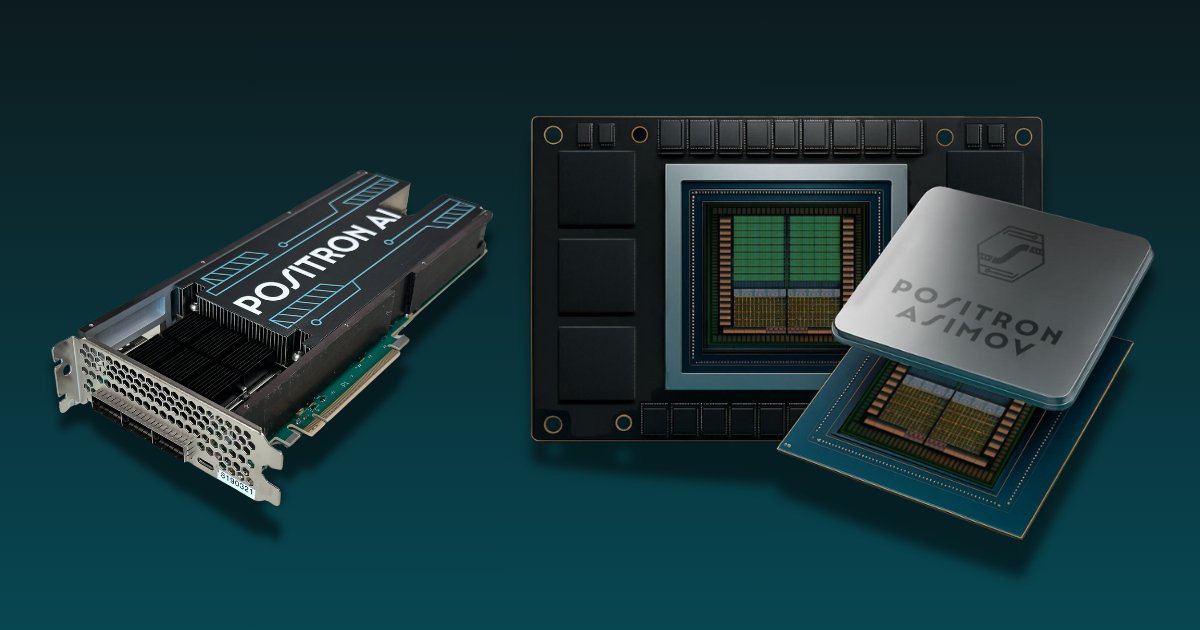
Semiconductor startup Positron has secured $230 million in Series B funding, TechCrunch has learned exclusively. The company plans to use the capital to accelerate deployment of its high-speed memory chips, a critical component for chips used for AI workloads, sources familiar with the matter told TechCrunch.
Investors in this round include the Qatar Investment Authority (QIA), the country’s sovereign wealth fund, which is increasingly focused on building AI infrastructure, the sources said.
The Reno-based startup’s Series B comes as hyperscalers and artificial intelligence firms look to reduce their reliance on longtime leader Nvidia. Among those firms is OpenAI, which, despite being one of Nvidia’s biggest and most important customers, is said to be unhappy with some of the firm’s latest AI chips and has been looking for alternatives since last year.
Meanwhile, through the QIA, Qatar is accelerating a broader push for so-called “sovereign” AI infrastructure – a priority repeatedly highlighted at the Qatar Web Summit in Doha this week. Multiple sources told TechCrunch that the country sees computing capacity as critical to staying competitive on the global economic stage and is positioning itself as a leading hub for AI services in the Middle East, fueling interest in startups like Positron.
The strategy is already taking shape through major commitments, including a $20 billion AI infrastructure joint venture with Brookfield Asset Management announced in September.
Positron’s fundraising brings the three-year-old startup’s total raised capital to just over $300 million. The startup raised $75 million last year from investors including Valor Equity Partners, Atreides Management, DFJ Growth, Flume Ventures and Resilience Reserve.
The company says its first-generation chip, the Arizona-made Atlas, can match the performance of an Nvidia H100 GPU for less than a third of the power. Positron’s focus is on inference—the computing needed to run AI models for real-world applications—rather than training large language models, putting the company in a position where demand for inference hardware increasingly shifts from building large models to deploying them at scale.
Techcrunch event
Boston, MA
|
June 23, 2026
Sources tell TechCrunch that beyond its memory capabilities, Positron’s chips also perform well in high-frequency workloads and video processing.
TechCrunch asked Positron for more information.