
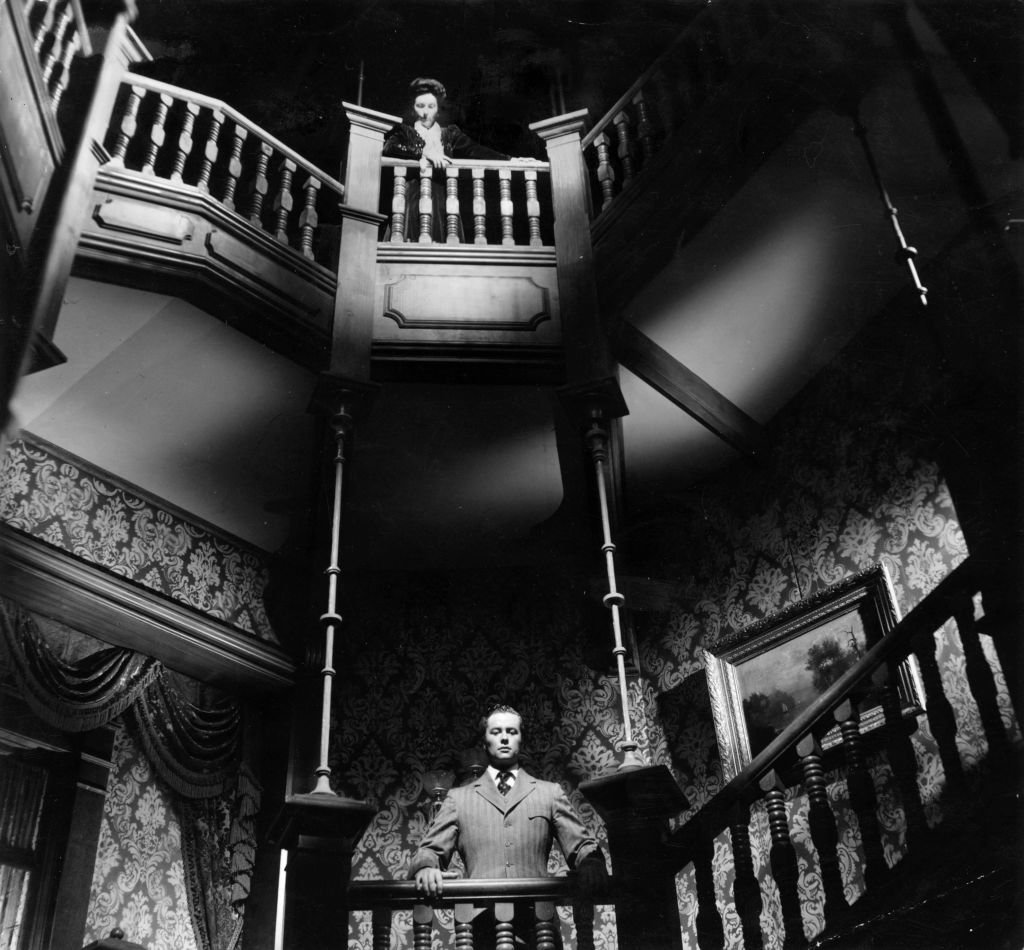
When the startup announced last fall that it planned to recreate lost footage from Orson Welles’ classic “The Magnificent Ambersons” using generative artificial intelligence, I was skeptical. More than that, I was confused as to why anyone would spend time and money on something that seemed guaranteed to outrage cinephiles while offering negligible commercial value.
This week, an in-depth profile by Michael Schulman in the New Yorker provides more details about the project. If nothing else, it helps explain why startup Fable and its founder Edward Saatchi are pursuing it: It seems to come from a genuine love of Welles and his work.
Saatchi (whose father was the founder of the advertising firm Saatchi & Saatchi) recalled his childhood of watching films in a private screening room with his “film mad” parents. He said he first saw “Ambersons” when he was twelve.
The profile also explains why “Ambersons,” though far less famous than Welles’ first film, “Citizen Kane,” remains so exciting — Welles himself claimed it was “a much better picture” than “Kane,” but after a disastrous preview, the studio cut 43 minutes from the film, added an abrupt and unconvincing happy ending, and ultimately destroyed the cut footage.
“To me, it’s the holy grail of lost cinema,” said Saatchi. “Intuitively, it seemed like there would be some way to undo what had happened.
Saatchi is only the latest Welles devotee to dream of recreating lost footage. Fable is actually working with filmmaker Brian Rose, who has been trying to do the same thing for years with animated scenes based on the film’s script and stills and Welles’ notes. (Rose said that after seeing the results for friends and family, “a lot of them were scratching their heads.)
So while Fable uses more advanced technology—filming scenes in live action and then overlaying them with digital recreations of the original actors and their voices—this project is best seen as a slicker, better-funded version of Rose’s work. It’s a fan’s attempt to catch a glimpse of Welles’ vision.
Techcrunch event
Boston, MA
|
June 23, 2026
Notably, while the New Yorker article includes several clips of Rose’s animations as well as images of the Fable AI cast, there is no footage showing the results of the live-action Fable AI hybrid.
The company itself admits there are significant challenges, whether it’s fixing obvious mistakes like the two-headed version of actor Joseph Cotten, or the more subjective task of recreating the complex beauty of the film’s cinematography. (Saatchi even described the “happiness” problem, where the AI tended to make the women in the film look inappropriately happy.)
As for whether the footage would ever be released, Saatchi admitted it was “a complete mistake” not to speak to Welles’ estate before his announcement. Since then, he is said to have been working to win over both the estate and Warner Bros., which owns the rights to the film. Welles’ daughter Beatrice told Schulman that while she remains “skeptical,” she now believes “that they are going into this project with tremendous respect for my father and this beautiful film.”
Actor and biographer Simon Callow – who is currently writing the fourth book in his multi-volume biography of Welles – has also agreed to advise the project, which he described as “a great idea”. (Callow is a family friend of the Saatchs.)
But not everyone was convinced. Melissa Galt said her mother, actress Anne Baxter, would “not approve at all”.
“That’s not true,” said Galt. “It’s someone else’s creation of truth. But it’s not the original, and she was a purist.”
And while I’ve become more sympathetic to Saatchi’s goals, I still agree with Galt: At best, this project will only result in a novelty, a dream of what the film could have been.
In fact, Galt’s description of her mother’s position that “once the movie was done, it was done” reminded me of a recent essay in which writer Aaron Bady compared the AI to the vampires in “Sinners.” Bady argued that when it comes to art, both vampires and artificial intelligence will always come up short because “art is possible” is the knowledge of mortality and limitation.
“There is no work of art without an end, without a point at which the work ends (even if the world goes on),” he wrote, adding: “Without death, without loss, and without the space between my body and yours that separates my memories from yours, we cannot make art, desire, or feeling.”
In this light, Saatchi insists it is there must to be “some way of making up for what happened” seems, if not downright vampiric, at least a little childish in its unwillingness to accept that some losses are permanent. It might not be all that different from a startup founder who says they can make complaints obsolete — or a studio executive who insists that “The Magnificent Ambersons” needs a happy ending.