
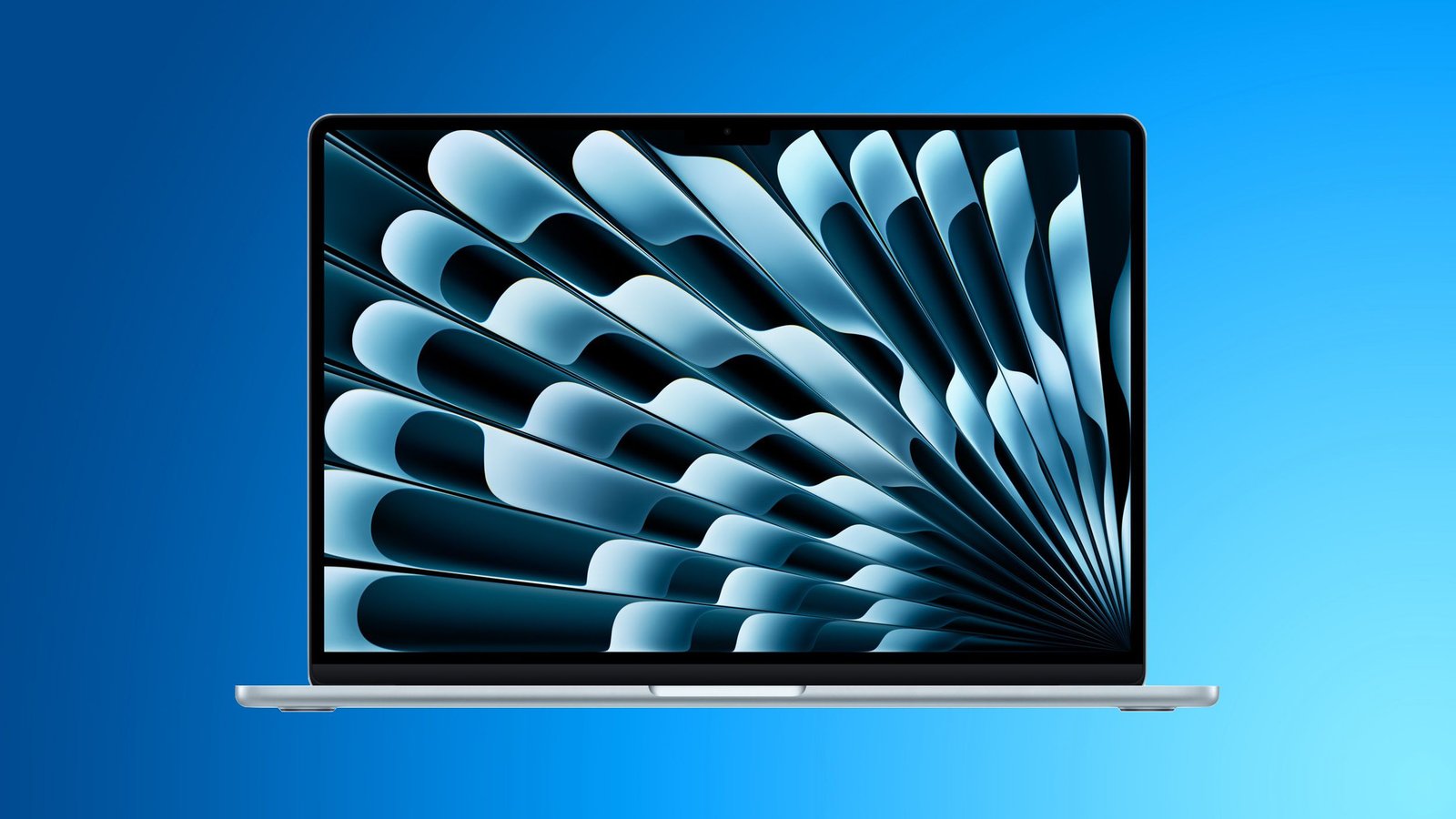
MacBook Air is Apple’s most popular laptop—a slim, fanless machine that’s quietly powered by the efficiency of Apple’s silicon. While the M4 isn’t exactly old, attention is already turning to its successor.
Apple doesn’t telegraph new product launches ahead of time, but we can get a surprisingly clear picture of what to expect by looking at Apple’s silicon roadmap, release cycles and past upgrades.
Release timing and price
Apple appears to have settled on a spring refresh cycle for the 13-inch and 15-inch MacBook Air. After releasing the M2 in mid-2022, Apple skipped 2023 with an all-new design, then delivered back-to-back M3 and M4 MacBook Air updates in March 2024 and March 2025.
Really, BloombergMark Gurman reports that Apple plans to launch M5 versions of the MacBook Air in the first quarter of this year. This suggests a likely window in March 2026 – unless Apple breaks the cycle, of course. As for the price, we expect it to remain stable, with the base model sticking to its current base price of $999.
Processor upgrade
The M5 series is expected to feature an improved ARM architecture and is said to be manufactured using TSMC’s advanced 3-nanometer process technology. Apple’s decision to ditch TSMC’s more advanced 2nm process for the M5 chip is believed to be due to cost considerations.
Recent leaked benchmarks – purportedly from the next-gen iPad Pro with the M5 chip – show single-core scores around 4,133 and multi-core around 15,437. That’s roughly a 12-15% jump over the current M4 iPad Pro in both categories. In terms of graphics performance, the M5 chip appears to have up to 36% faster GPU compared to the M4 chip.
The benchmark suggests that Apple focused on slightly increasing clock speeds and improving core-level efficiency for the M5 chip, rather than overhauling the architecture. In other words, the M5 will be similar to a gradual performance upgrade from the M3 to the M4. Expect 10-15% faster CPU speed, slightly more powerful GPU and better efficiency, which can lead to even longer battery life.
As a result, the M5 MacBook Air will likely be more responsive in day-to-day use, especially in single-threaded tasks, but won’t dramatically outperform the M4 for sustained workloads like video rendering.
Display and other possible changes
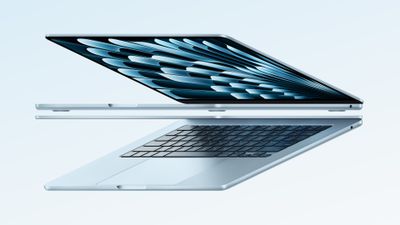
The M4 MacBook Air in Sky Blue, a color that Apple debuted earlier this year
Apple tends to stick to the same industrial design for multiple generations of chips. The current MacBook Air design (introduced with the M2 model) is only three years old and shows no signs of aging. Expect the same 13- and 15-inch sizes, the same fanless aluminum unibodies and similar display technology – meaning no OLED, which Apple appears to be saving for the first adoption of the MacBook Pro line, possibly later this year or in 2027.
If there are any physical changes, they are likely to be subtle. Think of improved webcam quality or enhancements to connect the next generation of wireless connectivity (such as Wi-Fi 7 or Bluetooth LE Audio). You never know – Apple might even offer the machine in a new color, just like it did previously with the M4.
Looking further ahead
According to reports from Korea, Apple plans to release a MacBook Air in 2027 with an improved LCD display that will feature Oxide TFT technology instead of the current amorphous silicon (a-Si) panels.
The new display technology is considered a significant upgrade over the current MacBook Air screens. Oxide TFT LCD panels offer better energy efficiency and better performance compared to traditional a-Si displays, resulting in sharper images, smoother scrolling and longer battery life.
The switch to Oxide TFT technology should also mean faster pixel response and more consistent brightness across the screen. In practical terms, this should mean less motion blur when watching videos or playing games, and more even lighting without the “cloudy” effect sometimes seen on current LCD displays.