
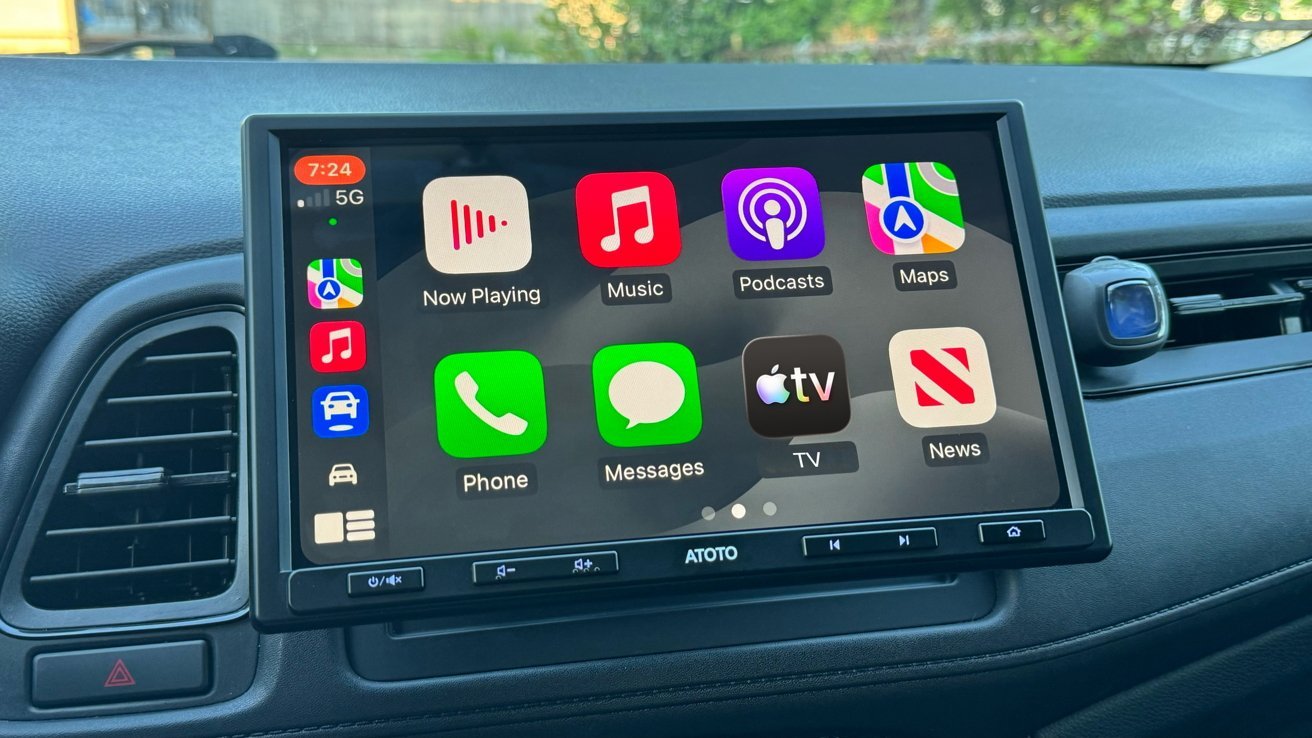
Apple is formally making room for in-car AI agents, adding a new category of voice-based conversational apps to CarPlay in iOS 26.4.
Apple’s February 9, 2026 update to the CarPlay Developer Guide introduces a new category of CarPlay permissions for voice-controlled conversational apps. The move creates an official path for third-party AI assistants to work within CarPlay instead of relying solely on Siri.
The change comes as generative artificial intelligence becomes more integrated into Apple’s platforms. CarPlay is next, but Apple is setting clear boundaries.
Developers can apply for a new entitlement starting with iOS 26.4. Apple still reviews and approves each request, leaving chat apps in the same permission system that governs navigation, audio, and communication apps.
The guide now lists “voice conversation-based apps” as a supported CarPlay category. Apple says these apps must launch directly into voice interaction and respond to questions or requests while performing actions.
Apple also limits how deep these apps can go into CarPlay. Voice chat applications are limited to a maximum of three template screens, including the main screen. This limit keeps the sprawling menu trees and layered user interface moving from the dashboard.
Railings for generative AI
Apple’s CarPlay documentation repeatedly emphasizes minimizing distraction in safety-critical environments. Conversational applications must prioritize voice, avoid unnecessary images, and release audio sessions as soon as the interaction ends.
Audio sessions can only remain active while using voice features. Developers are warned not to interrupt other in-car audio sources, including the FM radio, unless necessary.
Apple has long favored structured, predictable systems over open-ended behavior. Siri was originally built around defined intents and database-driven responses, not free text generation.
Generative AI models can produce detailed or unexpected answers. Apple’s CarPlay rules make it clear that unpredictability is not welcome behind the wheel.
Defining what an AI agent can do in a car
Apple builds conversational apps as task-driven services rather than passive chat interfaces. Applications must respond to requests and perform actions, reinforcing an execution-oriented model instead of an open-ended conversation.
The template system enforces this boundary. CarPlay apps can only use approved templates, and unsupported templates trigger runtime exceptions.
Developers cannot create fully custom interfaces outside of Apple. Voice conversational apps are also limited to three levels of template depth, keeping AI agents shallow, focused, and task-driven instead of sprawling across multiple screens.
CarPlay is designed to minimize distractions while driving
The voice control template is reserved for navigation apps and voice conversational apps. Other categories must rely on SiriKit or Siri Shortcuts for voice interaction.
Implications for Siri and Apple Intelligence
Siri remains a system-level voice assistant in CarPlay, but the new conversational category makes room for dedicated third-party AI services. Developers can create AI agents that launch directly into voice mode without routing everything through Siri.
Apple still controls access through permissions and App Store review. The approval process ensures that every AI agent that appears in CarPlay will work in accordance with Apple’s safety and design standards.
CarPlay operates in a safety-critical environment, and Apple’s documentation makes this priority unmistakable. Voice-based conversational applications must limit user interface depth, avoid distracting images, and disable audio sessions when no longer needed.
Apple is not ruling out generative artificial intelligence in the car. He makes sure that “Jesus gets behind the wheel” remains a metaphor instead of a feature.