
The AI pendant and AirPods with cameras are getting a lot of interest from Apple CEO Tim Cook, with his chatter about visual intelligence a big indicator of where Apple is headed.
Recent rumors have claimed that Apple is working on a form of pin or pendant that works with Apple Intelligence. Along with other forecasts for AirPods with cameras, they form part of an apparent third category of products that Apple CEO Tim Cook would like to introduce.
In Sunday’s “Power On” newsletter for BloombergMark Gurman recaps Cook’s recent advice on AI wearables and their connection to visual intelligence.
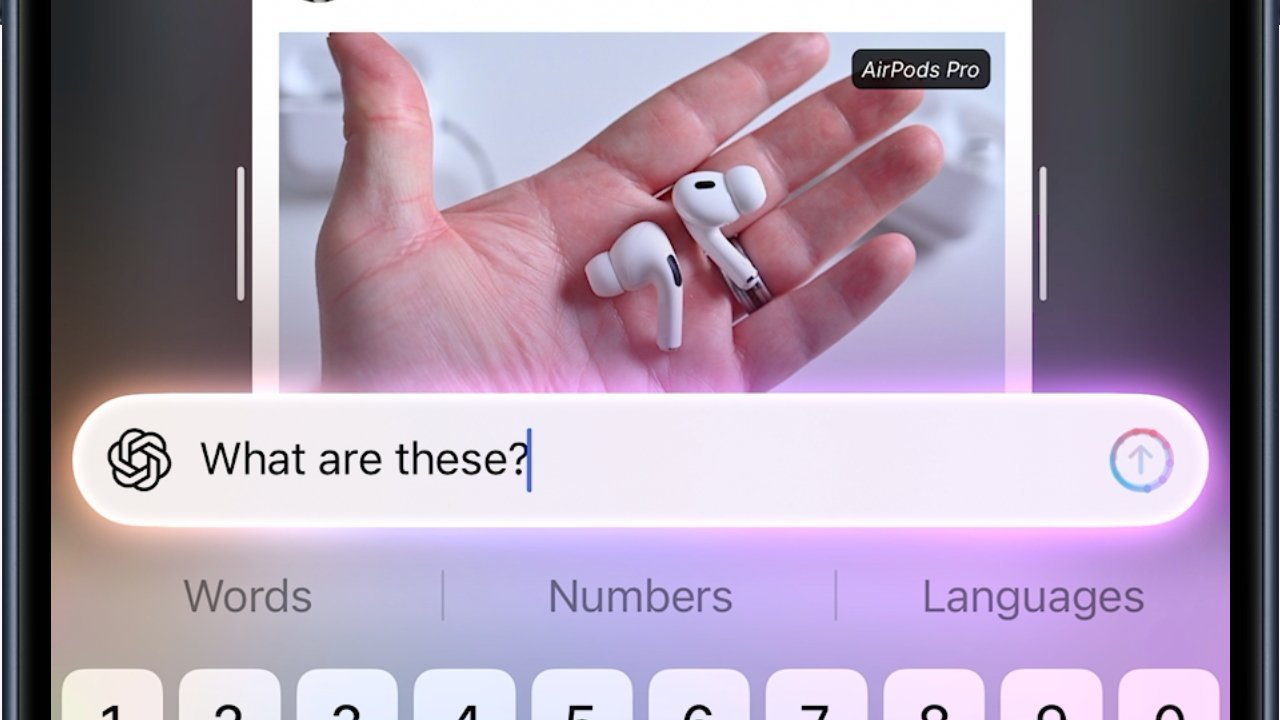
This is an Apple Intelligence feature that deals with queries based on the content of a photo or image. While Visual Intelligence currently passes these queries to ChatGPT OpenAI, Apple is working on making its own visual models work.
If successful, it will be a central technology that will make a range of wearable devices even more useful.
Let it cook
As evidence of this, Gurman points to the holiday quarter earnings call. Cook introduced Visual Intelligence and declared it one of the most popular features of Apple Intelligence.
At the all-hands meeting, Cook also insisted that Apple has a “huge advantage” in AI thanks to its massive install base of 2.5 billion devices. When he talked about Apple Intelligence, he highlighted visual intelligence again.
While Apple’s current visual intelligence is really a wrapper for OpenAI and Google’s AI services, Gurman says Cook’s promotion is interesting. Cook wouldn’t be promoting it so much if he didn’t believe Apple would do much more in this area.
Apple is working on its own algorithms and systems for visual recognition. This includes its computer vision work with Apple Car, its AR work for Apple Vision Pro, and even recent articles like Ferret-UI Lite for app interface analysis.
Cook’s promotion is seen as a precursor to Apple replacing these external AI systems with its own models for visual intelligence. When it does, it will have more opportunities to introduce its own new hardware into the mix.
It’s also not the first time he’s talked about a feature or topic before introducing products in the category.
In 2013, Cook declared a massive expansion in sensors while working on a wearable medical device. That was before the introduction of the Apple Watch and its eventual addition of sensors expanding health-related capabilities.
This was repeated with the Apple Vision Pro, with Cook openly discussing the benefits of augmented reality and virtual reality even before the product was released.
Gurman looks to them as a role model, and this lecture by Cook on visual intelligence fits perfectly.
Worn cameras
In terms of hardware, the first thing expected to appear in the AI wearables category is a new pair of AirPods.
A version with cameras is expected to arrive in late 2026 and will place cameras on personal audio accessories. The cameras would give the AI a view of the world, similar to that of smart glasses like Apple Glass, but without frames.
These cameras would be low-resolution or infrared, designed less for photography and more for giving Apple Intelligence a view of the world.
The ideal smart glasses should be thin, light and minimalistic in their design
Apple Glass is also expected in late 2026 in a camera- and audio-based form, similar to Meta’s Ray-Bans partnership. However, a full-fledged augmented reality experience is also expected to arrive in a future update.
The last item mentioned is the AI pin, which has also mutated in rumors to mean a pendant that can also be clipped onto clothing. It will also feature a camera to power Apple Intelligence.
As for their usefulness, Gurman thinks that basic applications could include simple identification of ingredients from a plate of food.
A more advanced concept is for navigation, as looking at the environment can provide more intuitive directions based on landmarks. Think “turn left at the sign” instead of being told to turn after 50 feet.
It can even prompt users with a reminder if they see specific items of interest.
Still a long way to go
While it’s fun to look at the wearables of the future, it’s important to remember that there’s a lot of work to be done before it becomes a reality.
Cameras on AirPods have been rumored for a while now, but implementation was always going to be difficult. Even with Apple’s expertise, they have to miniaturize the camera and related electronics to fit inside the AirPods.
Something similar has probably already been done with heart rate sensors, but the cameras require much more bandwidth to work live with the iPhone.
Miniaturization has been a constant concern for Apple and is one of the reasons why smart glasses have taken so long to develop. Apple wants minimal additions to the typically light and thin frame of the glasses, which makes Apple Glass particularly challenging.
There’s also the ongoing delay in the rollout of the new Siri and its contextual features to consider. The slow turnaround of Apple’s jewel in the AI crown will affect developments in other areas.
Apple has the ability to pull all of this off and bring wearable artificial intelligence in the future. But as it stands and with the challenges it faces, it won’t be an immediate introduction.