
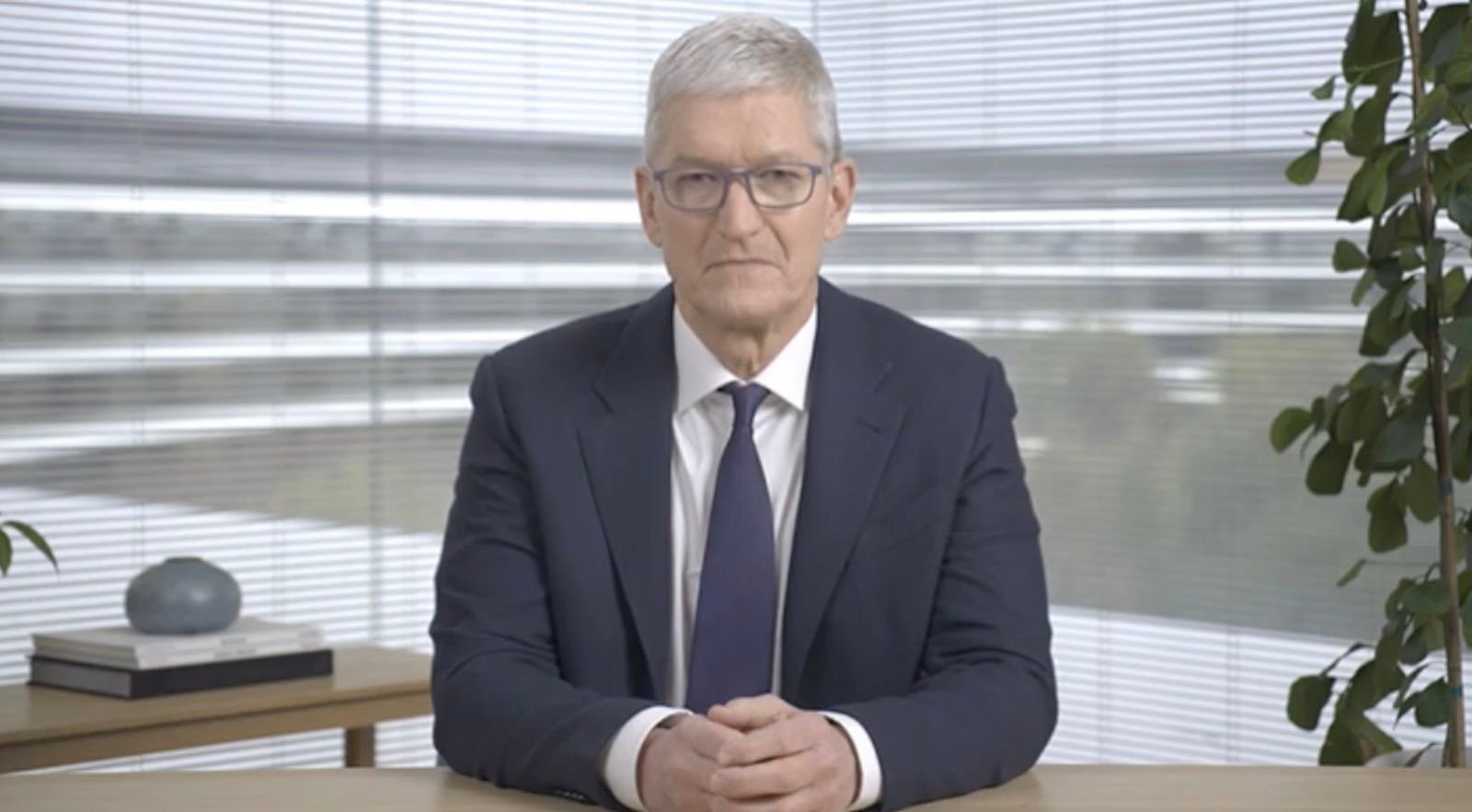
Apple CEO Tim Cook was among a handful of top tech executives who attended a secret CIA briefing that warned China could attack Taiwan by 2027, according to a sweeping investigative report The New York Times ($).
The previously unreported meeting apparently took place in a secure room in Silicon Valley in July 2023. The meeting was said to have been arranged at the request of then-Commerce Secretary Gina Raimondo, who was frustrated by the tech industry’s reluctance to move chip manufacturing out of Taiwan.
CIA Director William Burns and Director of National Intelligence Avril Haines reportedly presented the latest intelligence on China’s military plans to Cook, Nvidia CEO Jensen Huang, AMD CEO Lisa Su and Qualcomm CEO Cristian Amon.
Cook reportedly told officials afterward that he slept “with one eye open.”
A similar secret meeting was reportedly held at the White House in late 2021, but executives were skeptical because much of the intelligence had already been released. Earlier that year, a senior US military official told Congress that the armed services believed Chinese President Xi Jinping wanted his military to be ready to take Taiwan by 2027. From the report:
Jake Sullivan, Mr. Biden’s national security adviser, ranked the U.S.’s dependence on Taiwan for semiconductors as one of America’s biggest vulnerabilities. He wanted the industry to recognize the risk and encourage the construction of manufacturing plants in the US. Mr. Biden also wanted to provide $50 billion in government subsidies to build semiconductor plants domestically — the result of the Chips and Science Act of 2022.
“We were like, ‘This is crazy. We have to do something about it,'” Mr. Sullivan said in an interview.
The investigation reveals Silicon Valley’s stubborn dependence on Taiwan Semiconductor Manufacturing Company (TSMC), which makes about 90 percent of the world’s most advanced chips, including all of Apple’s own silicon for iPhones, iPads and Macs.
2022 Confidential Report commissioned and reviewed by the Semiconductor Industry Association RIVET concluded that losing access to Taiwan’s chip supply would trigger the worst economic crisis since the Great Depression, with US GDP falling by 11 percent. Another message from Bloomberg as of January 2024, it estimates that the conflict will cost the global economy more than $10 trillion.
Despite the warning, RIVET The investigation found that companies including Apple were initially slow to buy more expensive chips from American factories. Chips made domestically cost more than 25 percent more than those made in Taiwan because of higher material, labor and permitting costs, and TSMC’s Arizona plants currently use technology a generation behind what’s available on the island.
However, Apple has since taken steps. Last summer, Cook visited the Oval Office and pledged to invest $100 billion in the United States, with the money to be used to support TSMC and other chip makers. Apple has also reportedly started holding day-long engineering meetings with Intel to assess its manufacturing options.
TSMC has now committed to about $165 billion in U.S. investments, including land for at least five more plants in Phoenix. The company’s Arizona plant recently produced Nvidia’s first U.S.-made AI chip, though the report says even those chips still need to be sent back to Taiwan for advanced packaging.
Meanwhile, the Taiwanese government maintains an unofficial policy that requires TSMC to keep its most advanced manufacturing technology on the island. This “silicon shield” is designed to make a country too economically important to attack—yet Russia’s invasion of Ukraine showed that economic self-interest does not necessarily preclude military aggression. TSMC’s CFO said earlier this year that its most advanced processes will remain in Taiwan for the foreseeable future.
Note: Due to the political or social nature of the discussion on this topic, the discussion thread is located in our Political News forum. All forum members and web visitors are welcome to read and follow the thread, but posting is limited to forum members with at least 100 posts.