
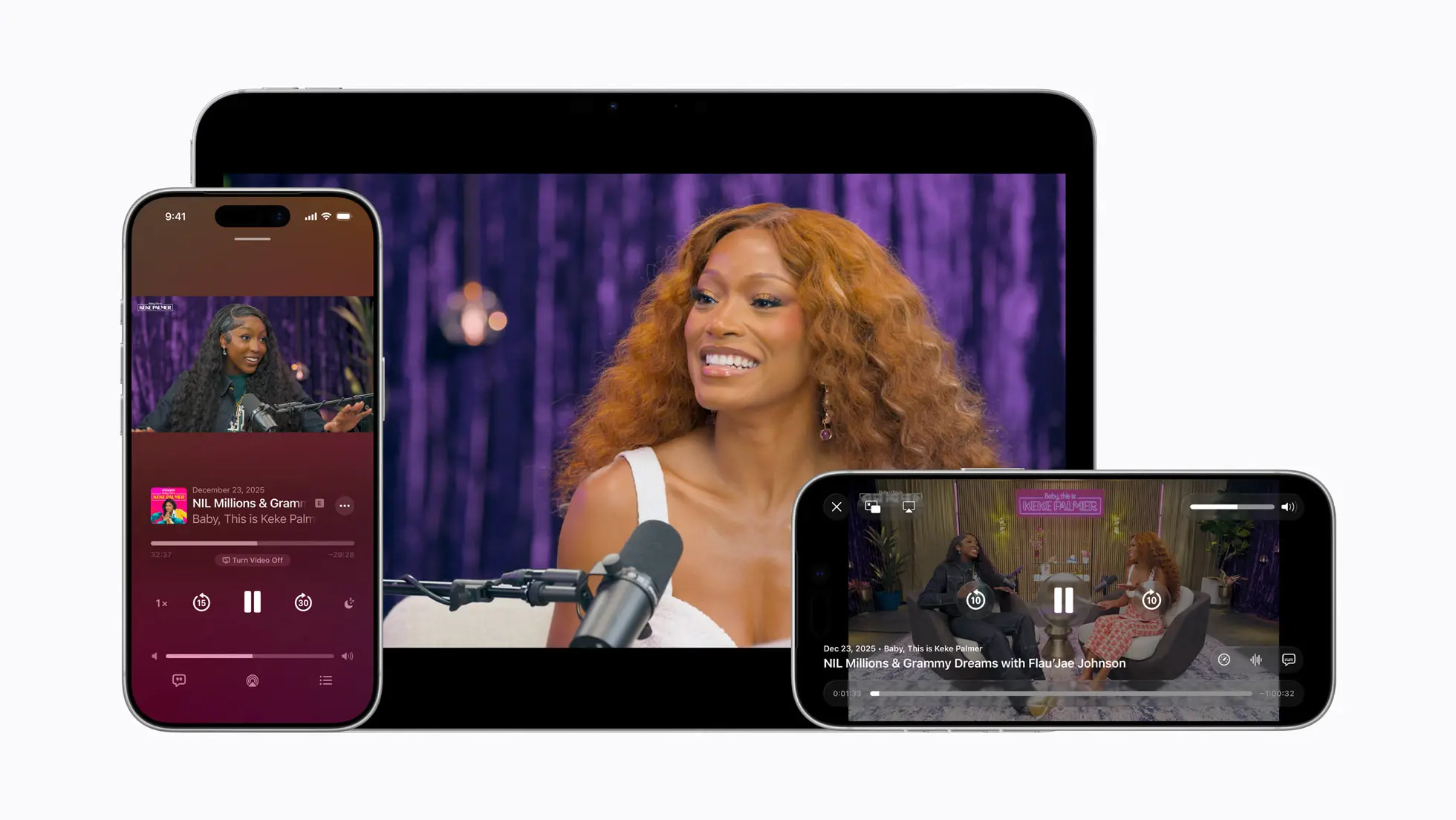
A major update to Apple Podcasts will introduce full support for video podcasts this spring using the company’s HTTP Live Streaming (HLS) technology, the iPhone giant said Monday.
The update promises a seamless experience for both viewers and podcast creators, with new monetization and content distribution tools that Apple says will set a new standard for the medium.
“By bringing a premium video experience to Apple Podcasts, we’re putting creators in full control of their content and how they build their business, while making it easier for viewers to listen or watch podcasts,” said Eddy Cue, vice president of Apple Services.
Apple adds video to Apple Podcasts
Apple introduced podcasts to listeners through iTunes in 2005, later transitioning to Apple Podcasts in app form as the medium grew in popularity. Now that video podcasts are becoming more popular, the iPhone giant is adding native video support with benefits for both users and creators.
What’s new for listeners
Inside the updated Apple Podcasts app, users will be able to switch between watching and listening to a show without interruption. It’s similar to how listeners today switch between audio-only and on-screen display. Video episodes will support full-screen horizontal playback and can be downloaded for offline viewing. This makes it easy to watch video content while commuting or flying.
The HLS backbone behind the feature means the app will automatically adjust video quality based on the strength of your connection, whether you’re on Wi-Fi or mobile. Video episodes will also appear through the same customized recommendations and editorial picks that Apple Podcasts users already see on the New tab and Category pages.
The update is currently available for beta testing on iOS 26.4, iPadOS 26.4, and visionOS 26.4. It will launch publicly this spring on iPhone, iPad, Apple Vision Pro and through the Apple Podcasts web player at podcasts.apple.com.
A big moment for creators
Photo: Apple
For podcast creators, the update unlocks access to a much larger video advertising market. For the first time in Apple Podcasts, creators will be able to dynamically insert video ads, including reading spots recorded on camera. This gives them a new source of income while retaining full creative control over their content.
Importantly, Apple will not charge hosting providers or creators for distribution. And this regardless of whether they use traditional RSS/MP3 or the new HLS video format. Apple says it will charge participating ad networks a fee for dynamic ad serving later this year.
Creators can add a video to an existing show without disrupting their current subscriber count or download metrics. So they can test the video without starting from scratch. Distribution will be through participating hosting providers at launch: Acast, ART19 (an Amazon company), Triton’s Omny Studio and SiriusXM (which includes SiriusXM Media, AdsWizz and Simplecast). Additional providers are expected to join in the future.
Apple adds video to Apple Podcasts: Why it matters
Apple first brought podcasting to mainstream audiences when it added the category to iTunes in 2005. And the dedicated Apple Podcasts app has been a central part of the environment ever since. Today, users can get the app in more than 170 countries and regions. It offers millions of shows in hundreds of categories, plus features like Enhance Dialogue mode, playback speeds from 0.5x to 3x, automatic chapter creation, timed links and transcripts for over 125 million episodes in 13 languages.
The announcement comes at a time when video podcasts are skyrocketing in popularity. Platforms like YouTube are increasingly competing for podcast audiences. By adding support for native video with HLS technology—and keeping the ecosystem open to existing hosting and advertising infrastructure—Apple positions Apple Podcasts as a serious target for video creators who want to reach audiences on iPhone, iPad, Mac, Apple Watch, CarPlay, and Apple Vision Pro without giving up control over their content or revenue.
Podcasters and hosting providers can find more information on how to enable HLS video and create video episodes at podcasters.apple.com.

David Snowan expert on Apple hardware and software, writes on a variety of technology and cultural topics for Cult of Mac. They include Apple news, tech buying guides, and features on setting up your computer and Apple TV shows and movies.
With 30 years of experience in technology and other topics, he has written and edited numerous print and online publications, including CMP media, TechTV.com, OVERHANG, Cable news, Red herring magazine, Law.com, National Law Journal and Law Technology News magazine. Among other roles, he served as executive editor of the Law.com network of websites and editorial director of technology for ALM Media.
Snow graduated from Syracuse University with a bachelor’s degree in magazine journalism and psychology. While there he worked as a reporter for Daily orange newspaper and associate editor Same time magazine.
Founder of the blog On the water linecan be reached on X (formerly Twitter) via @atthewaterline and on Mastodon via @dsnow.