
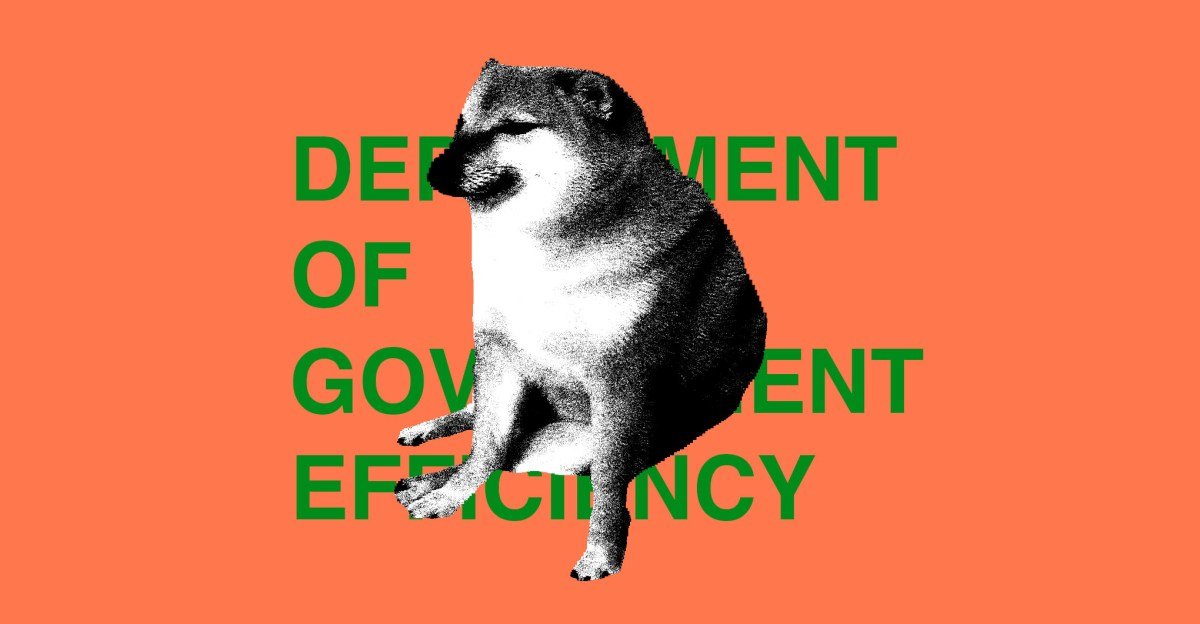
A year and nearly 2,000 pages of documents later, a group suing to reveal what the Department of Government Efficiency (DOGE) was doing at the Federal Communications Commission (FCC) says the agency withheld relevant documents “in bad faith” and is asking a court to allow discovery and depositions to obtain the information.
“To date, Defendant has sought to delay the production of documents, and when pressed by this court to act, Defendant has produced only sanitized email threads,” wrote Arthur Belendiuk, an attorney with the advocacy group Frequency Forward, and journalist Nina Burleigh, who jointly requested the FCC documents under the Freedom of Information Act (FOIA), in a new court filing. “The evidence clearly demonstrates that the FCC acted in bad faith in withholding the documents in response to Plaintiffs’ FOIA request.”
Frequency Forward and Burleigh say the FCC failed to produce documents in response to their FOIA request to clarify any potential conflict of interest between billionaire Elon Musk’s role as the public face of DOGE and the FCC, which regulates his company SpaceX. The group asked the FCC to produce documents related to FCC Chairman Brendan Carr’s visits to Musk-affiliated facilities, but the filing says the agency has failed to do so, even for trips Carr has publicly posted online. Frequency Forward identified eight posts Carr made on X at the time of their request for documents that show he visited what appears to be a SpaceX or Tesla facility. But the group says the agency has not produced any documents related to Carr’s office planning the trips, not even a travel itinerary or calendar event.
“The evidence clearly shows that the FCC acted in bad faith”
Burleigh and Frequency Forward say it is “critical” that they get this information. “(T)he FCC refused to consider the conflict of interest created by Musk’s role as a super contributor to the Republican Party on the one hand, his role as head of DOGE, and his control over SpaceX as an FCC-regulated entity on the other,” Belendiuk writes in the filing. “Providing a detailed description of Musk, his companies, and DOGE’s contacts with the FCC will provide the public with a better understanding of the issues such a relationship raises.”
The only email in the entire production from Carr himself is fully redacted and is an apparent response to how the agency should respond to various press requests, including one from The Verge you can find information about DOGE employees in the employee directory. The FCC did not produce any text messages in response to the FOIA request, nor did it identify their existence to explain why they could not be released, Frequency Forward says, even though some of the emails contained a public exchange of reference texts. The FCC did not immediately respond to a request for comment on the filing.
The group also accuses the FCC of omitting critical details about DOGE employees joining the agency. For example, Tarak Makecha, a DOGE employee of the Office of Personnel Management (OPM), apparently spent two weeks at the FCC and, according to the filing, requested and at times received “substantial amounts of information from Commission employees including broadband map data and detailed personnel records relating to Commission employees.” “However, there is no evidence that Makecha was ever actually ‘boarded’ into the Commission or went through the required security or ethics checks before receiving such information.” And although Makecha said in a public financial disclosure form that he has shares in Tesla, Disney and a telecom portfolio, the agency has not produced any documents discussing his ethics approvals or agreements to recuse himself on certain matters.
“Who leaves a federal post almost as soon as they start, after looking up sensitive agency data, and why is the paper trail so thin?” Belendiuk asks in a statement The Verge. “If the Commission wants the public to believe this was routine, it should be able to produce routine records of registration, ethics and background checks. Instead, those records are missing or fragmented, and what we’ve seen raises more questions than answers.”