
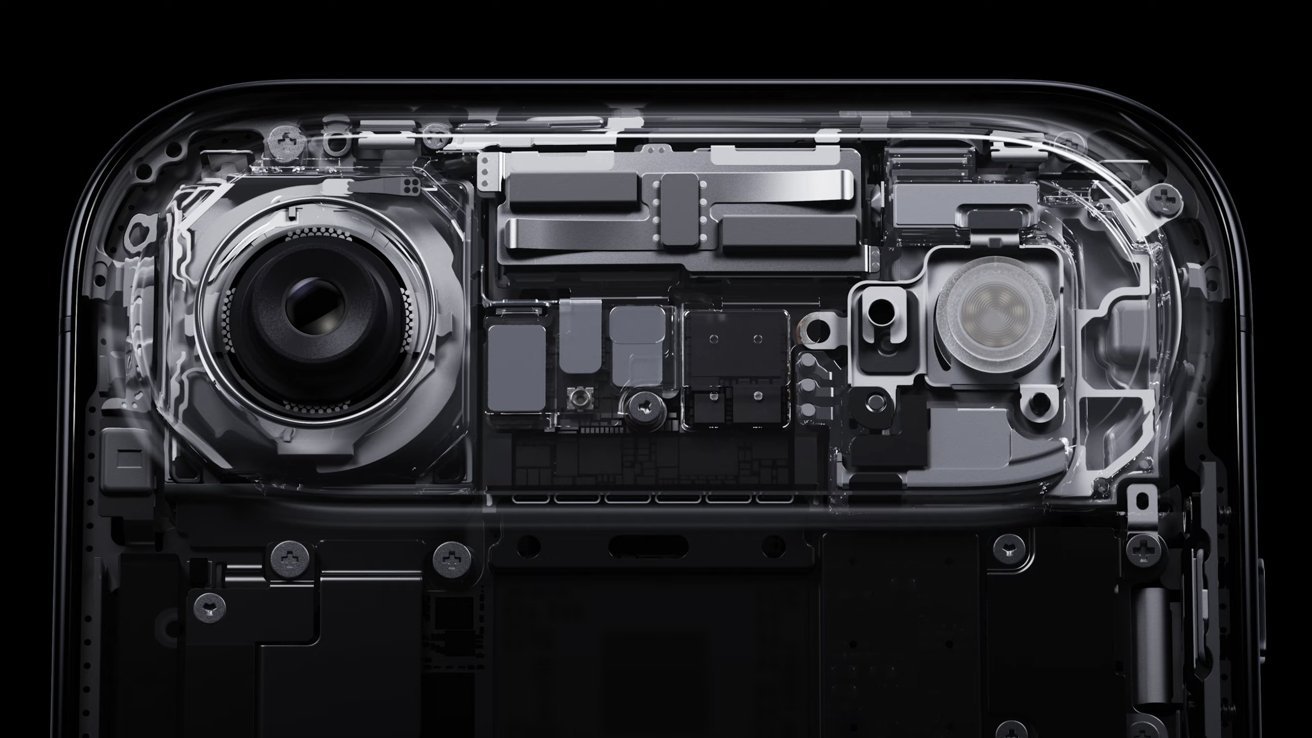
The see-through iPhone Air with a functional SIM card slot looked like a hardware hack for the ages, but it also showed exactly what was sacrificed when the edges of the factory design disappeared.
In a new video, YouTuber Linzin took viewers on a 22-minute journey through Huaqiangbei, China’s famous electronics market. There, technicians worked their magic by laser stripping the back glass of the iPhone Air for a see-through effect.
They didn’t stop there and milled space for the SIM slot directly into the frame. They’ve also mastered subtle board-level micro-soldering to make the eSIM-only iPhone Air work with a physical SIM.
The modified phone turned on, connected to the carrier and worked fine. Under load, it heated up more and lost its water resistance.
The hacked iPhone Air also had slightly degraded haptics and ended up needing a repair because the microphone tape came loose.
Making the iPhone Air more transparent
Technicians began by using a laser to remove the inner layer of paint behind the rear glass, revealing the internal components. In the process, they made sure to preserve the MagSafe magnetic ring and camera trim.
During the process, the internal graphite thermoplastics were removed. These boards normally spread the heat from the system-on-chip and battery around the chassis.
After reassembly, stress tests showed higher operating temperatures. Apple’s thermal layers were designed to maintain performance and long-term reliability, not to show off internal hardware.
Transparent iPhone mods have been around in Shenzhen for years, often called “Explorer Edition” conversions. Apple has never released an iPhone with a clear case, and the internals were not set up to be seen.
Adding a physical SIM slot to an eSIM-only design
The iPhone Air didn’t come with a physical SIM card slot, so it used eSIM technology instead. Adding a SIM card slot required a more complex modification to its ultra-thin frame.
The technicians carefully put the phone into a CNC milling machine to make a precise cut in the metal chassis. However, milling near antenna lines and structural parts can pose a risk to signal and service life.
The thin chassis meant that the original Taptic Engine had to be removed. A smaller linear motor took its place, and Azhe estimated that it was running at about 90% of the original’s power.
Apple’s Taptic Engine was pretty big because it needed mass and precise tuning to provide fine haptic feedback. If you downsized the motor, it changed the vibration characteristics, even if it was just a little.
Technicians began work at the board level using laser-assisted rework and microscopic soldering. They bypassed the logic to make sure the new SIM tray was connected to the phone’s cellular system.
After rebooting, the modified device recognized the physical SIM card. If you wanted to do a hot swap, a reboot was required for it to be detected.
Warranty, water resistance and long term risk
Opening the chassis and milling the frame voided Apple’s warranty and the factory waterproofing was lost once the seal was broken. While traveling, the modified iPhone had a microphone malfunction due to a loose ribbon cable.
The iPhone had to be sent back to Shenzhen for repair.
Huaqiangbei had a long history of modifying iPhones, especially after the US iPhone 14 models removed the physical SIM trays. Qualified technicians there routinely performed microsoldering and component-level repairs outside of Apple’s authorized service network.
Mass-produced consumer electronics operated under various constraints. Apple designed for compliance, long-term durability, thermal stability and a consistent user experience across millions of units.
The transparent iPhone Air with a functional SIM slot proved that determined engineers can reshape Apple’s hardware. It also illustrated why Apple balanced aesthetics, thermals, haptics, and structural integrity the way it did.