
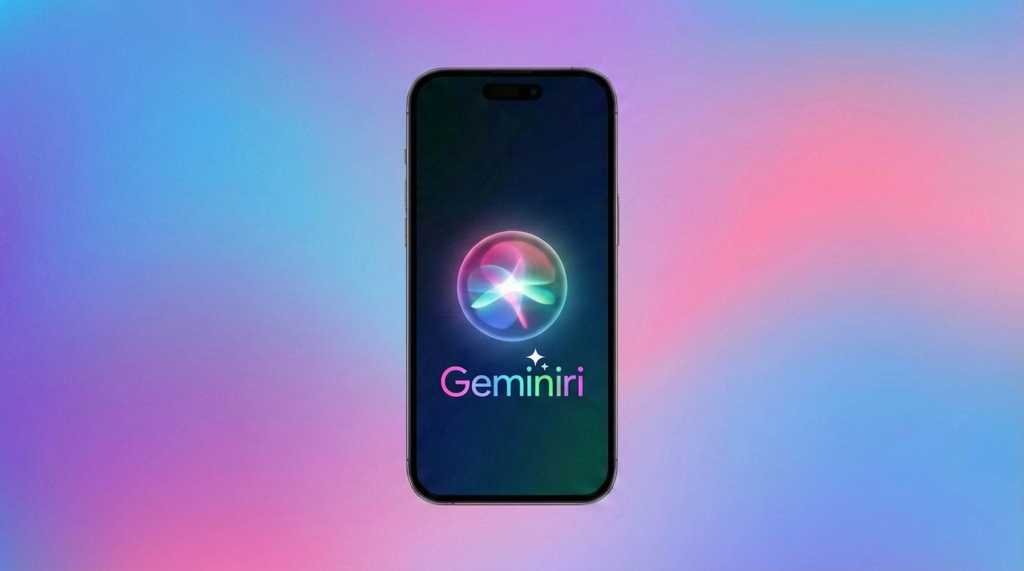
Ever since Apple and Google jointly announced a partnership underpinning the Gemini-based Siri voice assistant, questions have been raised about user privacy. Apple has done its part to offer reassurance by insisting that Gemini-powered Siri will continue to run on the device or on the company’s own Private Cloud Compute (PCC) servers, not Google-owned infrastructure.
But doubts remain. At his triumphant Q1 earnings call late last month, CEO Tim Cook responded to a question about the Gemini partnership in part by saying, “We will continue to operate the facility and operate PCC while maintaining our high standards of privacy. As for the deal with Google, we’re not disclosing the details of that.”
As 9to5Mac points out, it’s worded in a way that it could mean additional Apple Intelligence features will be hosted as described, while the new version of Siri will be handled differently. I don’t think that’s what he was saying (“deal with Google” almost certainly refers to the financial aspect of the question), but it’s one possible, if vague, interpretation.
Those doubts resurfaced Wednesday after another earnings call, this time from Google. The company’s CEO, Sundar Pichai, mentioned the partnership in his remarks as follows:
“I am delighted to be working with Apple as (its) preferred cloud provider and to develop the next generation of Apple Foundation models based on Gemini technology.”
Hearing Google refer to itself as Apple’s “preferred cloud provider.” when discussing the Gemini partnership is undoubtedly alarming, and I don’t blame scholars for drawing negative conclusions. One news site (9to5Mac, link above) interpreted this as Google “proposing” that Gemini-powered Siri would run on its servers; another (AppleInsider) said that Apple’s and Google’s statements were “seemingly contradictory”. But again, Pichai’s statement has vague implications rather than clear meaning, and I don’t think we should take it as a direct contradiction of Apple’s privacy claims — something that would, in effect, be a declaration of PR war.
Like Cook’s statement, there are several interpretations of what Pichai said. One is that Apple has lied through its teeth and Gemini-powered Siri will run on Google’s servers in a way that gives Google access to user data. Another is that Google will simply lease Apple’s server hardware as part of the deal. They will be Apple Park servers with Apple software, but the hardware will be “provided” by Google. This would likely fulfill Apple’s commitment to privacy, although the optics may not be great. And another is that Pichai awkwardly and at the worst possible time referred to the fact that Google already provides extensive cloud services to Apple in other areas, and that this latest partnership is just another example of the fruitful collaboration between the two tech giants.
In other words, the whole thing is frustratingly vague. At this point, we have a partnership with many details still to be decided, and both partners have very different priorities when it comes to public news. Apple wants to assure its users at all times that their privacy will be protected, while Google wants everyone to know that its Gemini AI platform is more important and successful than ChatGPT. So the result is a lot of statements that vary in implication but don’t really say much.
There is a fourth possibility suggested by Bloomberg’s Mark Gurman. The point is that Gemini-powered Siri will run, Apple keeps saying, on Apple devices or servers, but another, more radical version of the voice assistant, a chatbot codenamed Campos, will launch later and run on Google servers. That’s going to be a tough sell, assuming Gurman is right (and he’s only saying the two companies are discussing the idea). But Apple will at least have a little more time to prepare it for its users.