
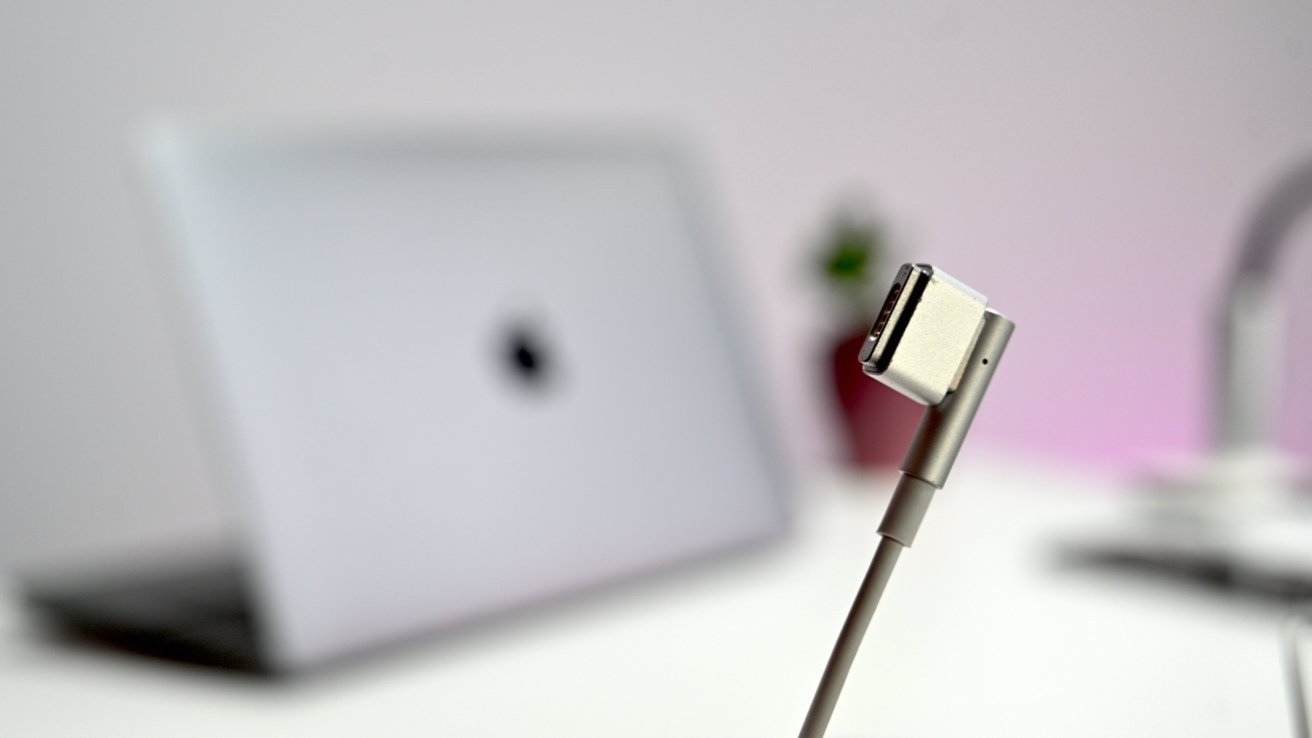
And here it is again, with a viral TikTok with no basis in fact. The latest lie claims that the iPhone 18 will ditch USB-C and have a small MacBook-like MagSafe plug.
It’s pretty common these days. A link to TikTok about Apple will appear, which is forwarded and cloned on the site. Millions of hits later, it reaches the ears of the mainstream media, who take it as gospel straight from Tim Cook’s desk.
The latest lie is that the 2026 iPhone is getting an almost microscopic MacBook-like Magsafe charger and USB-C will be deleted from the device.
That won’t happen.
The iPhone 18 will of course be equipped with MagSafe charging. The joke of reusing the same Apple name for different things will ensure that this is the case.
But iPhone MagSafe uses circular pucks that max out at 25 watts. What this TikTok video shows is a variant of the original MagSafe, the kind that in its latest incarnation charges Apple laptops at up to 140 watts — a completely different proposition.
That alone is a good reason to wish this video were true. But that’s not the main reason I wish I could use Apple’s MagSafe-like charger with the iPhone.
This is the same reason Apple added MagSafe to the MacBook line back in 2006. I want it to prevent my iPhone from being thrown across the floor every time my dog gets near it.
History lesson
Apple announced MagSafe for use with the MacBook and MacBook Pro in 2006 before adding it to the MacBook Air when it debuted in 2008.
Apple’s January 2006 press release for the all-new MacBook Pro explained what buyers would get from MagSafe. The patent-pending connector “safely disconnects from the laptop when the power cord is under stress, helping to prevent the laptop from falling off the work surface when the power cord is accidentally jerked.”
Even back then, 20 years ago, MagSafe charged MacBook Pros at 85 watts, all while keeping them safe from the then-famous cable-related falls.
Apple later revised MagSafe and changed the shape before removing it once USB-C charging came to the fore with the MacBook Air 2017. This was a mistake they eventually corrected with the M2 MacBook Air in 2022.
Fixed issue
The MagSafe flavor for the iPhone was announced alongside the iPhone 12 in 2020. The re-use of the MagSafe name was even stranger when the M2 MacBook Air debuted another MagSafe connector.
But while the iPhone’s MagSafe offers wireless inductive charging and uses magnets, the name MagSafe doesn’t quite do it justice.
Accidentally catch your foot on the MagSafe charger cable and you’ll always throw your iPhone across the room. The ring magnets are too strong and have too much surface area to do anything the self-detachable MagSafe system has to offer.
Apple’s MagSafe puck just doesn’t cut it
I experience this with alarming regularity. It’s a miracle the iPhone Air I reviewed in late 2025 is still in one piece, really.
I’ll preface this by admitting that I might be part of the problem. I tend to leave my iPhone on the arm of our sofa when we’re watching TV – but I don’t think I’m unique in that regard.
I find the iPhone Air battery to be fine, but that’s partly due to having chargers all over the place. One is a nice, long USB-C cable for charging while I’m on the couch.
And I also have two spaniels.
To say that I’ve lost count of the number of times one of those dogs has caught a cable while playing and felt the iPhone go flying isn’t right. At this point, he may spend more time on the floor than on the couch.
Sure, I tried the MagSafe charger, just in case that helps. It just meant that the iPhone flew further because it was no longer limited by the length of the cable. It turns out that these magnets eventually fall out, but only on the first bounce.
So yes. Every time this happens, my wife tells me it’s my own fault for leaving the iPhone there. And he’s probably right.
But that’s a problem solved in the MacBook world. It’s time for this to be resolved in the iPhone world as well. And Apple already has the technology to do it.
Evergreen portless iPhone rumor
Even on the MacBook, MagSafe is about power – unlike USB-C, it does not process data. This could be a problem when you remember that the iPhone needs a USB-C connection for things like software restores and the like.
But maybe it doesn’t have to be that way anymore.
Apple has been rumored to be working on a portless iPhone for as long as I can remember. The iPhone Air was rumored to be almost portless.
As early as May 2020, rumors claimed that the iPhone 13 would be portless and use a smart connector to process data.
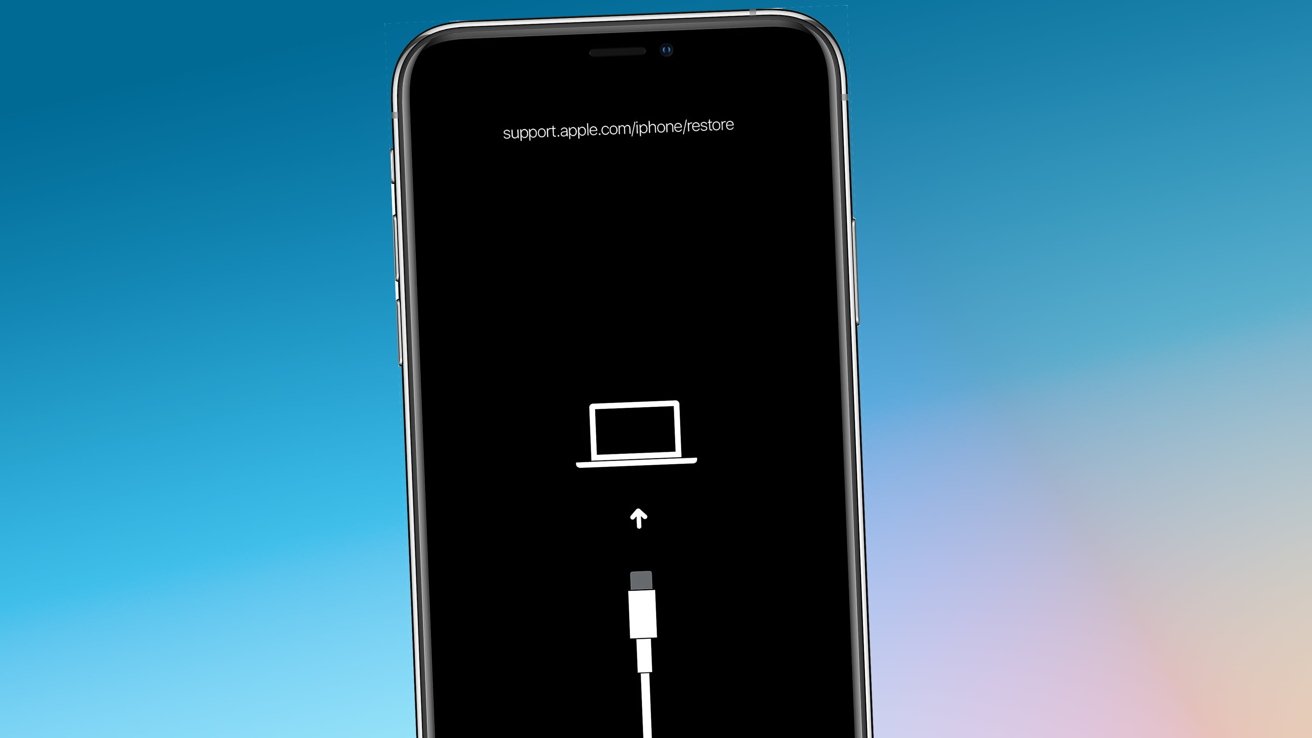
It’s time to restore the iPhone without a cable.
Subsequent rumors claimed that Apple had a wireless way to reset the iPhone in the works. It used the magic of the internet to do the job in a similar way to over-the-air iOS updates.
At this point, it’s clear that Apple has at least considered doing away with the cable altogether. I would suggest that the best solution is somewhere in the middle.
In a perfect world, future iPhones could charge using MacBook-like MagSafe and offer the speed and security I crave. Then, if recovery is needed, the internet recovery system can be used.
What’s not to like?
The real reason MacBook MagSafe isn’t coming to the iPhone
Unfortunately, there’s one thing you don’t like. And that’s the real reason why this TikTok video is bad, and Apple’s MacBook MagSafe may never make it to the iPhone, no matter how much I want it.
The story goes that Apple had to abandon plans for a portless iPhone Air due to European Union legislation. It turns out that the same legislation that ultimately forced Apple to ditch Lightning in favor of USB-C is a double-edged sword.
The EU requires all phones sold in the block to use the same USB-C charging cable. After hundreds of Android phones adopted USB-C and years of legislative debate, this ultimately meant the iPhone had to do the same.
But that’s also why Apple can’t remove the same USB-C port from the iPhone, at least not in EU member states, so not in the world. USB-C is here to stay whether you flush your iPhone or not.
But that doesn’t mean Apple can’t be creative. I imagine a cable with MagSafe-like technology that terminates in a USB-C connector would be allowed, and there are plenty of third-party options. After all, standard USB-C cables would continue to work as usual.
Whether such a solution would offer the auto-disconnect solution I desire is another matter. But that’s a problem for Apple’s tech team to solve, not me.
2026 onwards
Whatever Apple’s plans, the iPhone 18 won’t see any major changes to charging. Despite the fact that it’s still more than a year out, we’d already hear rumors and see leaks.
2026 to 2027 are expected to be the years when Apple changes its iPhone release window for the first time in a long time. For some time now, we’ve been getting a new generation of iPhones every September, including the Pro models.
If Apple is to be believed, the iPhone 18 Pro and iPhone 18 Pro Max will be joined by the first foldable iPhone in September 2026. The premium device is likely to be called the iPhone Fold, and will undoubtedly attract attention.
Those waiting for the iPhone 18, the edition without the Pro, will have to wait a little longer – until spring 2027, if the rumors are correct. It will probably break the cover along with the budget-oriented iPhone 18e, if it even exists.
But while Apple is changing the way it releases iPhones, it isn’t changing the way we charge them. USB-C is here to stay, for better or for worse.