
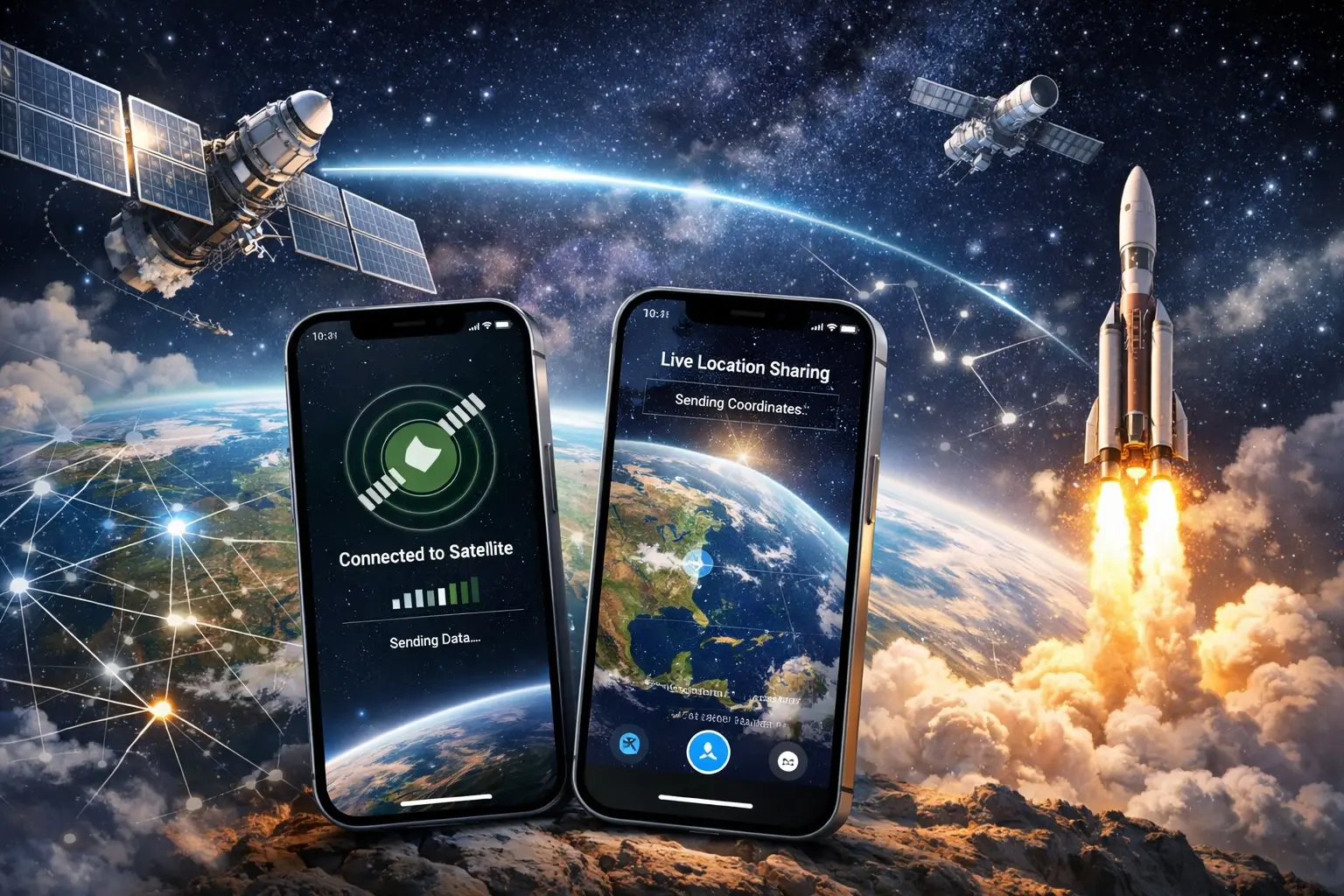
Apple’s journey to satellite connectivity began as a lifesaving emergency feature with the iPhone 14 in 2022. But the company’s ambitions go far beyond distress signals to more advanced iPhone satellite features. Experts see a dramatic expansion of satellite capabilities changing the way we think about smartphone connectivity. The iPhone 18 in 2026 and later could see satellite features evolve from an emergency backup to everyday use.
Advanced Satellite Features for iPhone: From emergency tool to always-connected ecosystem
The current satellite experience on the iPhone 14 through iPhone 17 models requires users to hold their device skyward and carefully aim it at the satellites orbiting overhead. Messages crawl at a glacial pace and are limited to text emergency communication only. The technology has helped rescue hikers stranded in remote wilderness and disaster victims cut off from cellular networks. However, it remains a feature reserved for desperate circumstances rather than everyday use. However, the signs are that this is about to change.
Apple’s vision for the iPhone 18 and subsequent models represents a fundamental paradigm shift. The iPhone giant wants to make satellite connectivity ‘natural’ – eliminating the need to point the phone completely at the sky – according to reports from Bloomberg and industry analysts. Future iPhones are expected to maintain a satellite connection even when tucked in a pocket, sitting on the dashboard of a car or even being used indoors. They will seamlessly switch between mobile and satellite networks as needed.
This transformation is made possible by the development of Apple’s 5G non-terrestrial network (NTN) technology. It allows cell towers to use satellite links to dramatically extend coverage to remote areas. Instead of treating the satellite as a separate emergency system, the iPhone 18 will integrate it as part of the standard connectivity package.
Photos, maps and third-party applications: Expanding the satellite toolbar
Photo: Apple
Perhaps the most exciting development coming to devices after the iPhone 17 is the dramatic expansion of what you can actually do over satellite. Apple is actively developing several features that will reportedly debut on the iPhone 18 Pro models.
Sharing photos via satellite represents a significant leap in bandwidth. While iOS 18 introduced basic text messaging over satellite, the ability to send and receive images requires significantly more data bandwidth. This enhancement will make satellite reporting really practical for keeping in touch with family during backcountry adventures or documenting emergencies with visual evidence.
Navigation also receives satellite processing. Apple Maps integration will allow users to access turn-by-turn maps and turn-by-turn directions without a cellular or Wi-Fi connection. Combined with weather updates downloaded directly via satellite, this could make the iPhone 18 an indispensable tool for outdoor enthusiasts, remote workers and international travelers venturing outside traditional coverage zones.
Perhaps most transformative is Apple’s planned third-party API framework. This will allow developers of applications such as WhatsApp, tourist navigation tools and other communication platforms to integrate satellite functions directly into their applications. Rather than being limited to native Apple apps and services, satellite connectivity will become a platform feature that can be used by the entire app ecosystem.
The hardware revolution: Apple modems and Starlink collaboration

Photo: Apple
The satellite ambitions of the iPhone 18 should undergo significant hardware changes. After years of relying on Qualcomm chips, Apple is expected to introduce its own next-generation “C2” modem with the iPhone 18. OVERHANG. The modem will enable seamless switching between terrestrial cellular networks and satellite connections, improving performance and battery efficiency.
Even more interesting are reports that Apple is currently in talks with SpaceX to integrate a direct Starlink network into the cells of future Pro models. This potential partnership could dramatically accelerate Apple’s satellite plan, as the Starlink system is designed to deliver higher data speeds, voice calls and potentially video streaming directly to unmodified smartphones.
The Starlink collaboration, if it materializes, would represent a major strategic shift. While Apple’s current satellite capabilities rely solely on the Globalstar constellation, Starlink offers a much larger network of low-orbit satellites with more advanced direct-to-device capabilities. This could allow the iPhone 18 Pro to offer satellite connectivity that approaches the speed and functionality of traditional cellular networks, at least for basic communication and data tasks.
Subscriber question: will satellite connection cost extra?

Photo: Apple
Current users of iPhone models 14 through 17 enjoy Emergency SOS via satellite for free, with Apple repeatedly extending the period of free access. However, advanced features coming to the iPhone 18 and beyond may bring new pricing models.
The higher bandwidth capabilities enabled by 5G satellite networks – including photo sharing, mapping and third-party app integration – will likely require a premium subscription. These could integrate with carrier plans or potentially require direct payments to satellite service providers such as Starlink.
Apple is reportedly helping fund the expansion of the Globalstar satellite constellation. This suggests that the company remains committed to offering at least basic satellite features as part of the standard iPhone experience. However, the most advanced features, especially those that use the Starlink network for data-intensive applications, could become premium add-ons similar to how carriers currently layer mobile data plans.
Timeline and availability: When and where will we see these features?

Image AI: ChatGPT
Industry analysts expect the iPhone 18 Pro, Fold and Air models to launch in September 2026, with the standard iPhone 18 pushed to 2027. The rollout of satellite features is likely to vary by model and region. The most advanced capabilities — including photo sharing, Maps integration, and potential Starlink connectivity — should appear in the iPhone 18 Pro and Pro Max models, according to multiple reports.
Geographical accessibility will also play a crucial role. Satellite connectivity features require regulatory approval in each country. And a complex web of spectrum allocation and licensing means that advanced features can debut in the United States and select markets before rolling out globally. Users will receive Apple’s current emergency SOS via satellite in more than a dozen countries. However, a more ambitious always-connected vision will require significantly more regulatory complexity to be mastered.
Advanced Satellite Features for iPhone: Ubiquitous Connectivity as the End Game
Apple’s satellite plan reveals an ambitious vision: smartphones that never lose connection, regardless of location. By the end of the decade, the difference between cellular and satellite connectivity may be invisible to users. The device could automatically use whichever network provides the best connection at any given time.
This transformation goes beyond mere convenience. Truly ubiquitous connectivity could reshape telecommuting, enable new applications in agriculture and environmental monitoring, provide critical connectivity during natural disasters, and bring Internet access to underserved regions. And all without the massive infrastructure investment required for traditional mobile networks.
Looking ahead to the iPhone 17 to iPhone 18 and beyond, satellite connectivity could evolve from an emergency feature to a mainstay of how smartphones connect to the world. The trajectory is clear. The future of mobile connectivity is not just mobile or satellite. It’s both, working together to keep you connected wherever you are.

David Snowan expert on Apple hardware and software, writes on a variety of technology and cultural topics for Cult of Mac. They include Apple news, tech buying guides, and features on setting up your computer and Apple TV shows and movies.
With 30 years of experience in technology and other topics, he has written and edited numerous print and online publications, including CMP media, TechTV.com, OVERHANG, Cable news, Red herring magazine, Law.com, National Law Journal and Law Technology News magazine. Among other roles, he served as executive editor of the Law.com network of websites and editorial director of technology for ALM Media.
Snow graduated from Syracuse University with a bachelor’s degree in magazine journalism and psychology. While there he worked as a reporter for Daily orange newspaper and associate editor Same time magazine.
Founder of the blog On the water linecan be reached on X (formerly Twitter) via @atthewaterline and on Mastodon via @dsnow.