
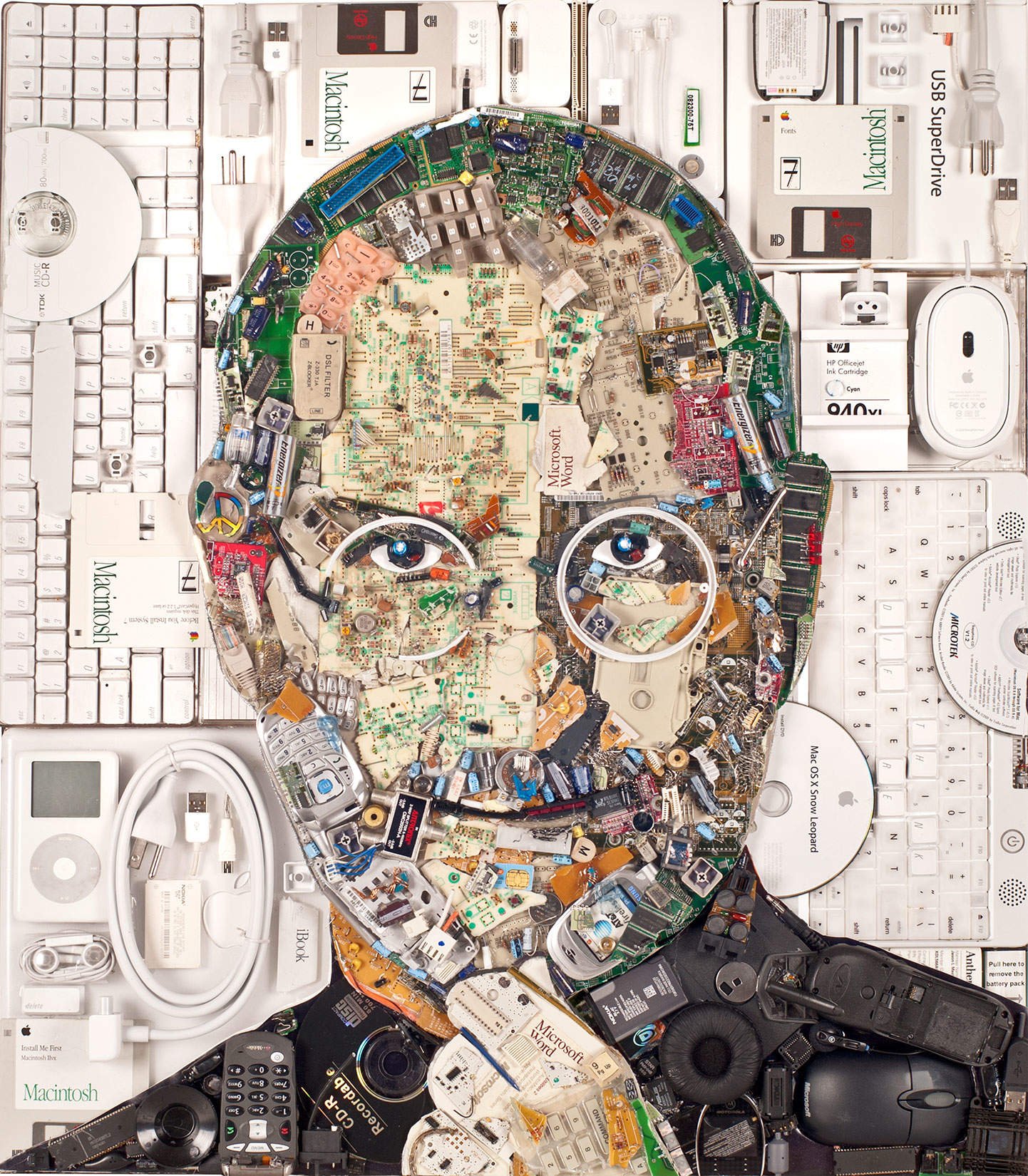
February 24, 1955: Steve Jobs was born in San Francisco. He co-founded Apple and became one of the most important figures in the history of consumer technology. He’s also probably a big part of why you’re reading this site right now.
Happy Birthday Steve! Let’s take a moment to reflect on your innovation, artistry and overall brilliance.
Steve Jobs’ Birthday: A Brief History of Innovation
What can we say about Steve Jobs on his birthday that hasn’t been written a hundred or a thousand times before? His Apple co-founder, Steve Wozniak, was more of your typical geek. But Jobs’ vision of consumer technology went far beyond catering to a select group of hacker enthusiasts. He envisioned products that would appeal to virtually every person on the planet.
Jobs is one of a very small group of CEOs whose lives tell the story of the personal computer’s rise to prominence. He helped oversee the growth of personal computers from homebrew kits, of which the Apple 1 was one of many examples, through the mass market Apple II.
His company popularized the graphical user interface and the WIMP (windows, icons, mouse pointer) interface for Macintosh computers, then moved on to connected web browsing devices such as the iMac, iBook, and eventually the iPhone and iPad.
That’s before you even get into his pioneering efforts at NeXT, the work at Pixar Animation Studios that made him a billionaire, the industry-changing iTunes Music Store, and the iPod—any of which would cement the sole entrepreneur’s legacy.
Like Bill Gates, but so different
Jobs is often associated with Microsoft founder Bill Gates, but they were very different individuals. Gates’ relationship with computers has always seemed to be a means to an end. He didn’t build his own hardware. And as Xerox PARC pioneer Alan Kay once noted, the people who care about the software really they also need to build their own hardware.
Launched a year after the Macintosh in 1985, the Microsoft Windows operating system was good in the way that a roomy family car was good. It proved to be functional and, provided it could get you from A to B without crashing, kept most people happy enough.
Jobs, on the other hand, was a perfectionist for whom technology was everything. After he died in 2011, several opinions emerged noting the differences in charitable giving between Jobs and Gates. (Jobs was not much of a believer in philanthropy.)
You can argue all you want about the topic. But to me it always seemed to sum up their different approaches. Technology made Gates rich and he used it to make the world a better place. For Jobs, building good technology was itself about making the world a better place.
Steve Jobs: A natural artist who thought differently
Steve Jobs’ methods were not always liked by everyone. Everyone who worked with him has a story of withering defeat. It’s like in a scene Jaws in which characters compare scars. But Jobs cared about what he was doing, and it showed.
The peculiar thing about being an “artist” in the tech industry, rather than just selling products, is that your creations don’t have a very long shelf life. We can admire a picture that is hundreds of years old. But try to work on a computer from 20 years ago and you will find that parts of it are unusable.
Jobs acknowledged this irony in a 1994 interview when he was 39. “All the work I’ve done in my life will be obsolete by the time I’m 50,” he said.
Fortunately, he was wrong—just as he was wrong in 1985 when, in his depressed 30s, he declared that no older artist had achieved anything of lasting significance. He wasn’t often wrong in his predictions, but we’re glad he was on those occasions!
It’s easy to laugh at the level of perfectionism that caused Jobs (for example) to demand that the insides of NeXT computers be painted black, even though no one had ever seen them. But it’s also undeniable that so many of the machines he set his perfectionist demands on still look impressively modern today. 2000 Power Mac G4 Cube, we’re looking at you!
Happy birthday, Steve Jobs, born February 24, 1955
Jobs fiercely controlled Apple’s narrative, sometimes taking personal credit for team efforts. But he always wanted the company not to get too hung up on the question, “What would Steve do?” after he was gone. Judging by Apple’s financial success in the years since his death, Cupertino has clearly learned its lesson.
But we will always be sad that there will never be another “one more thing” from Steve.
What is your favorite memory of Steve Jobs seven decades after he was born? Did you have a chance to meet him? What was his greatest contribution to the technological world? Leave your comments below.
