
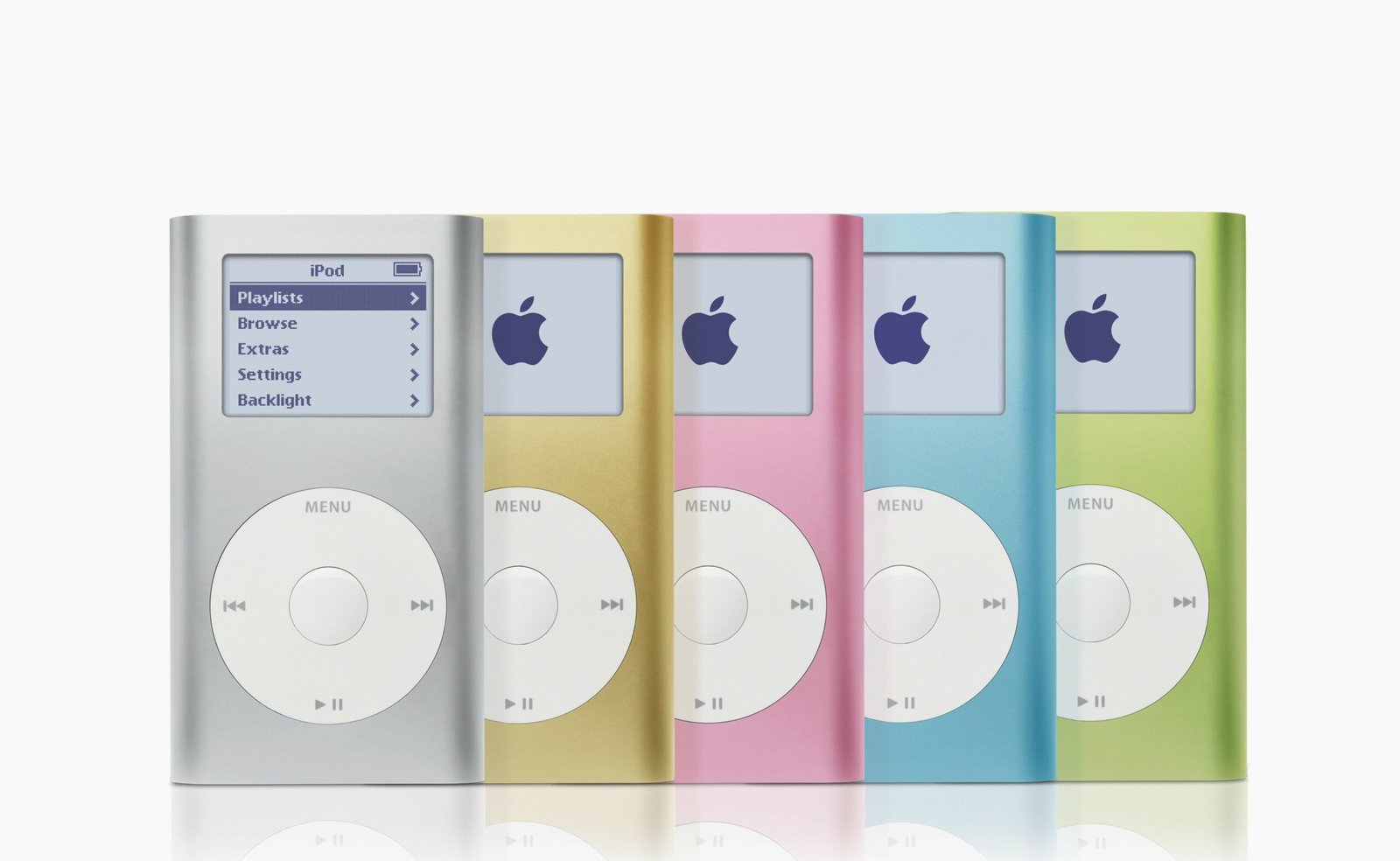
February 20, 2004: Music is small as the launch of the iPod mini brings the redesigned digital audio player to Apple stores.
Released with 4GB of storage and five colors, the tiny device features a new “click wheel” that integrates control buttons into a touch-sensitive solid-state scroll wheel. It also shows Cupertino’s growing fascination with aluminum, which would become a hallmark of Apple design.
Despite its small size, the market potential of the new music player looms large. In fact, the iPod mini will soon become Apple’s fastest-selling music player to date.
iPod mini launched on February 20, 2004
The iPod mini arrived as the iPod helped erase memories of Apple’s terrible run in the 1990s. A year after the launch of the iPod mini, the number of iPods sold reached 10 million. Meanwhile, Apple’s sales increased at a rate previously unimaginable.
As you can probably guess from the name, the iPod mini itself brought incredible miniaturization. Like the later iPod nano, this device didn’t try to downsize everything about its bigger siblings. Instead, he demonstrated a new way of solving the same problems.
This is where the click wheel comes in
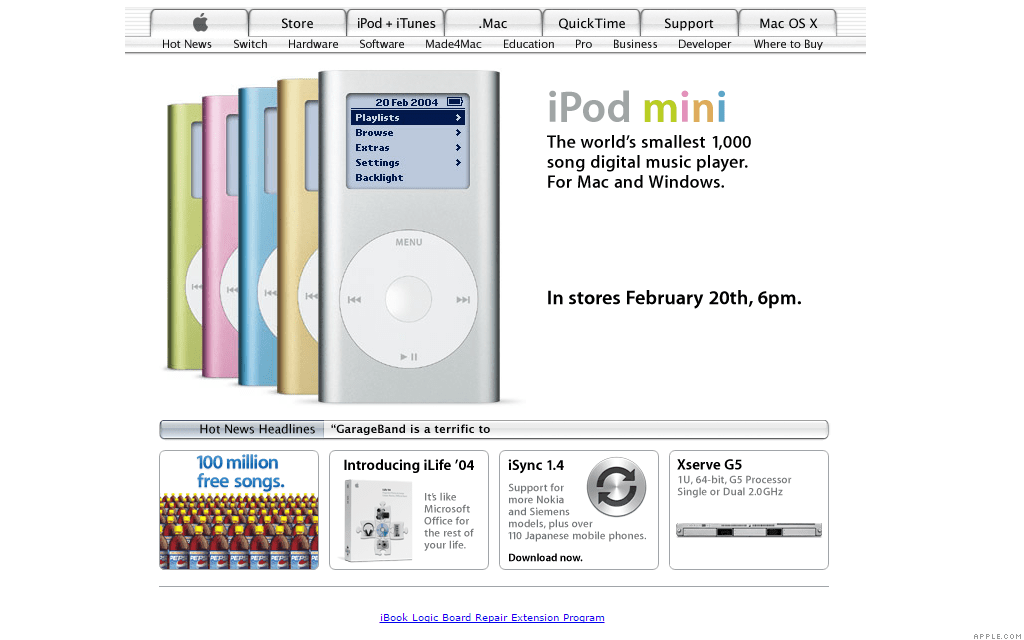
Image: Apple
In this case, that meant ditching the physical buttons of the larger iPod Classic for buttons incorporated into the four compass points of the click wheel itself.
“The click wheel was designed out of necessity for the mini because there wasn’t enough room for (the buttons on) a full-size iPod,” said Apple CEO Steve Jobs. “But the moment we experienced it, we just thought, ‘Oh my God! Why didn’t we think of this sooner?’
Apple has since adopted a gradual transition away from chunky physical buttons. Just look at the haptic Home button that came with the iPhone 7 and the complete lack of a Home button starting with the iPhone X in 2017.
Apple’s minimalist design and aluminum obsession
A study in minimalism, the iPod mini looked less like a tech product and more like a stylish Zippo lighter. The music player also marked the beginning of Apple design chief Jony Ive’s obsession with aluminum.
Ive’s team previously used the metal for the Titanium PowerBook G4. But while the laptop became a big hit for Apple, the titanium proved to be expensive and labor-intensive. To avoid scratches and fingerprints, it needed to be treated with a metallic varnish.
When members of Ive’s team researched aluminum for the iPod mini, they fell in love with the material, which offered the dual benefits of lightness and strength. It wasn’t long before Apple introduced aluminum as a material for MacBooks, iMacs and other products.
Like the plastic original iMac, the aluminum iPod mini came in a variety of colors, in this case achieved through an electrochemical anodization process.
iPod mini sparks Apple’s love affair with fitness
The tiny music player also sparked Apple’s foray into the fitness arena. People were using the device to listen to music while working out at the gym, and Cupertino featured this new use in advertisements. iPods began to appear as body-worn accessories. Many people who owned a larger iPod with more storage also bought an iPod mini for running.
Today’s fitness-focused Apple Watch ads owe a lot to the marketing of the tiny music player, which kicked off a fashion-focused ad for the wearable in Cupertino.
Remember the launch of the iPod mini? What version did you have? Leave your comments below.
