
Ten months after Trump imposed sweeping tariffs that hurt American businesses and consumers and hit Apple with $2 billion, the Supreme Court ruled that it was done illegally. Refunds will be messy.
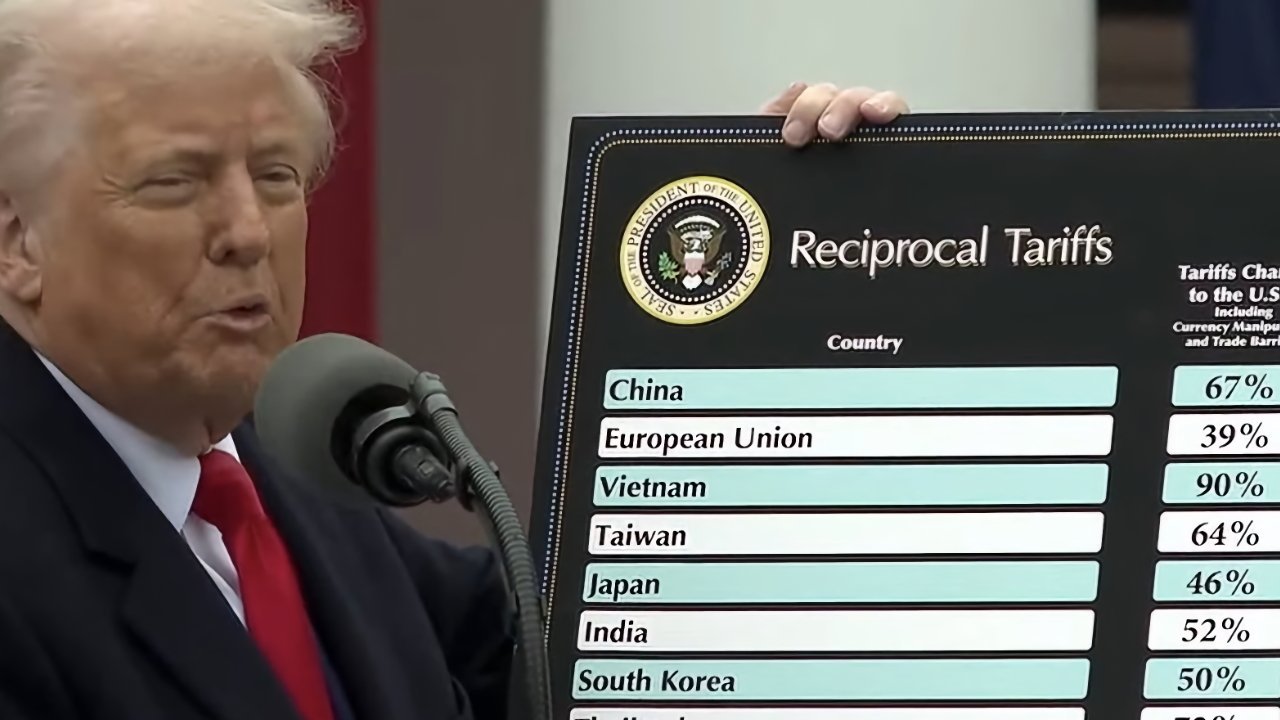
Trump was always expected to impose tariffs, but the scale of his April 2025 “Liberation Day” caught the world by surprise. The purported math behind the original rates has been derided, and Trump has raised them further to seemingly punish countries or even individuals like Tim Cook.
The Supreme Court ruled 6-3 that the imposition of tariffs without congressional input was illegal. Chief Justice John Roberts wrote the ruling that denied Trump’s claim that the International Emergency Economic Powers Act (IEEPA) gave him the power to act unilaterally.
“When Congress grants the power to impose tariffs, it does so clearly and with careful limitations,” Roberts wrote. “It did neither here.
“We do not claim to have special competence in matters of economics or foreign affairs,” Roberts wrote. “We assert only as we must the limited role vested in us by Article III of the Constitution. To fulfill that role, we hold that the IEEPA does not authorize the President to impose tariffs.”
Justices Clarence Thomas, Samuel Alito and Brett Kavanaugh reportedly dissent.
Kavanaugh specifically noted that the majority ruling says “nothing today about whether and, if so, how the government should return the trillions of dollars it collected from importers.”
“This (refund) process is likely to be a ‘mess,'” he concluded. And these refunds will be paid to importers and not to consumers who have had to bear the price increase.
What happens next
Kavanaugh is correct that the ruling only addresses the legality of the tariffs and does not address how refunds or buybacks should work. He is also correct that the funds were collected from importers, not foreign countries as Trump originally claimed.
In addition to the tariffs that US firms paid to the government, however, companies also invested heavily in adapting to the situation. Some firms reportedly hired additional staff to manage tariff calculations, while Apple spent hundreds of millions to reorganize its manufacturing and distribution network.
The ruling also does not address how smaller American firms have been put out of business by the tariffs. There is likely to be litigation over this.
More likely, Trump will try to enact those tariffs with something else, or use a different excuse. The next few days are sure to be hot and a new plan will follow in the next few months.
What has happened so far
Since the administration’s inception and throughout a century, import tariffs have been fully paid for by American business. Import goods from overseas, this tariff is applied before the goods are received.
Tariff costs are generally passed on to consumers.
In February 2025, even before the details of the “reciprocal” tariffs were announced, Apple was expected to be hit hard. Bank of America estimates that Apple may have to raise iPhone prices by 10%, which hasn’t happened yet.
It happened that other manufacturers increased the prices of goods. Most computer manufacturers have been affected, and consumers are being bullied for things like food, televisions, and computer components. The latter has been hit particularly hard not only by tariffs, but also by demands on data centers and AI.
It’s unclear exactly when Apple began taking steps to minimize its exposure to tariffs. However, it is known that when the “reciprocal” tariffs were announced, they were much higher than expected.
Apple stock has had a wild year
For example, China had a 50% tariff imposed on it. While that fluctuated, it was much higher than the roughly 4% applied by previous administrations under laws the Supreme Court said Trump violated.
As the trade war escalated, China and many countries simply imposed their own tariffs to reduce imports from the states.
Unsurprisingly, Apple’s stock price — and the stock price of at least most US companies — has taken a nosedive since the original tariff announcement. The tit-for-tat between the Chinese government and Trump’s unilateral tariff application is what has caused major damage along the way not only to big tech, but also to American Main Street businesses that have been associated with imports.
So the stock market struggled to predict what would happen, and it took most of 2025 for Apple’s stock price to rebound.
Apple has paid roughly $2 billion in tariffs to date. It is uncertain what the judgment means for this money, as it may have to be returned.